In Mad Max: Fury Road, Max drives a tanker truck through a desert wasteland in order to help rescue a group of women from the psychotic warlord who is pursuing them. That’s pretty much the entire plot of Fury Road, but it fails to capture the essence of what is one of the most intense, full-throttle, and absolutely insane action films of all time. But to reduce Fury Road by calling it an “action movie” is to ignore the craftsmanship, storytelling mastery, and the scale of what had to go into this film. Writer/Director George Miller has returned to his original creation 30 years after Max was last seen on the big screen and has managed to build something that feels unlike anything we’ve seen before, yet entirely at home in the universe of Mad Max combining elements of all three previous films. On the one hand, Fury Road defies description; it’s the sort of film that must simply be experienced, preferably on the big screen. But on the other hand, it also provides so much to talk about, from its strong feminist tendencies to its impeccable stuntwork to its brilliantly crafted visuals to its surprisingly clever storytelling. Fury Road is simply one of a kind.
Teenager Casey Newton spends her days in school listening to her teachers tell her over and over that the world is doomed, that war, injustice, and climate change will be the end of us, but never answering Casey’s question of how we fix it. She spends her nights breaking into NASA’s Kennedy Space Center in order to sabotage the demolition equipment poised to destroy one of their launch pads that is no longer in use, hoping to save both the space program that has inspired her as well as her dad’s job at NASA. Things start to change when, upon having her possessions returned to her after being arrested for trespassing, she’s given a mysterious pin that, when touched, seemingly transports her to another world. The vision only lasts a brief while, but it shows her a future where humanity is united in the pursuit of expiration, led by dreamers and optimists for whom Enstein’s quote “Imagination is more important than knowledge” is a guiding principle. The pin’s vision fades, and Casey is left with the unyielding need to find out more. Her quest will lead her from her home to a bizarre science fiction shop to a mysterious young girl who knows more than she’s letting on and finally to Frank Walker, who might have been able to take her to this Tomorrowland if only he hadn’t given up a long time ago.
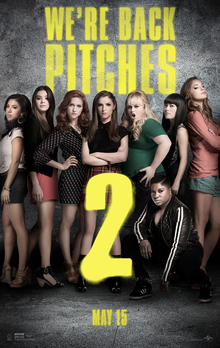
According to the assumptions by which Hollywood usually operates, Pitch Perfect should never have been an success. It was a musical about nerds, a film about women made mostly by women, with no box office stars to its name. It wasn’t a sequel, a remake, a superhero movie, or any of the typically bankable films that Hollywood regularly pumps out. Its eventual success happened not in spite of the things seemingly stacked against it, but because of them. It was a film that celebrated women the way it celebrated music, and served not the stereotypical male “geek culture” that movies like The Avengers cater to, but instead it embraced the nerd inside of us. The one that’s sometimes awkward or embarrassed, that hides from the world around us, but is immensely passionate about whatever it is that we love, music or otherwise. And in the end it made big stars out of its cast of familiar faces. There is no other movie among my friends and acquaintances that is as universally loved as Pitch Perfect, and it is always one of the first answers given to the question, “What should we watch?” Its passionate fanbase meant that a sequel was inevitable, and the only question was whether they could recapture lightning in a bottle and make something as special as the film that captured so many hearts. The answer isn’t quite so simple, but Pitch Perfect 2 is still a lot of fun, and it fills a niche that is too often ignored by Hollywood.
If there was one criticism that could be leveled against 2012’s The Avengers, it might be that the film was just a little too perfect. I know that sounds like a ridiculous thing to say, but bear with me. The second highest grossing film of all time was almost universally beloved and forever changed the landscape of the film industry with its success, but it was perhaps a little too polished. The action was too slick, the one-liners too well-timed and well-written, the effects too impressive, the heroes too heroic and the villains too villainous. For Avengers: Age of Ultron, the second Avengers film, the eleventh movie in the Marvel Cinematic Universe, and Joss Whedon’s second and final outing in the MCU, that perfection is intentionally avoided and the result is a film that’s messier, dirtier, more complicated, and ultimately a richer and better film than its predecessor.
Cinderella has generally received good reviews (currently at 84% on Rotten Tomatoes), but it’s had its fair share of detractors, particularly when it comes to how the film relates to feminism. I consider myself a feminist, as equality for women is one of my core beliefs and goals, so I’ve found myself in the week after seeing Cinderella asking a question: “Is there a feminist interpretation of Cinderella?” Many people probably already have an answer to that question, formed without having seen the movie. Some will answer, “No, of course there isn’t,” as everyone knows the story and most of us have seen the 1950 Disney animated version and can base an opinion from that. Others will answer, “Who cares?” either because they’re not interested in feminism, or they actually dislike feminist ideas entirely. This article isn’t for them, but it’s for people like me, who passionately support feminism but who also loved Cinderella. The question is whether we can reconcile these two, seemingly mutually exclusive, views.
Given the phenomenal level of success enjoyed by Frozen, a follow-up of some sort was inevitable. And while a full sequel was recently announced by the Frozen’s creators, we already have a sequel-of-sorts in Frozen Fever, the new animated short showing before Cinderella. The seven-minute short reassembles the team behind Frozen, including the directors, cast, and songwriters, to deliver a fun update to what Arendelle’s queen and princess have been up to now that Elsa’s ice has thawed.
Welcome to “Friday Favorites” which highlight some of my favorite movie-related things.
All Star Trek fans were saddened by the death of Leonard Nimoy two weeks ago. His impact on Star Trek as a story, saga, franchise, and experience is probably second only to Gene Roddenberry himself, as his character, Mr. Spock, is probably the defining character of Star Trek, ahead of Kirk, Picard, or any of the others. And while many articles celebrating his life and his work on Star Trek have focused on either his memorable quotes (“Live long and prosper” “The needs of the many outweigh the needs of the few” or “I have been and always shall be your friend”), the two Star Trek films he directed (The Search for Spock and The Voyage Home), or Spock’s biggest moments in the show or the film series, my mind keeps returning to one particular scene near the end of the final Original Series film, Star Trek VI: The Undiscovered Country.
To understand the scene (which is not available on youtube), here’s a brief summary of the film up until this point. The Undiscovered Country tells a parable about the end of the Cold War, with the Klingon Empire dying and an attempt to forge peace between them and the Federation, longtime enemies. Spock, now an ambassador, has reached out to the Klingon Chancellor and brokered a peace deal, and has brought the Enterprise and her crew out of mothballs in order to take him to escort the Chancellor to a secret location to sign a new treaty. Kirk and many of the others would have rather stayed retired, and Kirk in particular is opposed to the plan, as he has “never trusted Klingons, and (he) never will. (He’s) never been able to forgive them for the death of (his) boy.”
Things get off to a rough start as the Klingon ship and the Enterprise meet, but things get much worse when the Klingon ship is attacked in such a way where the Enterprise is blamed for it and Chancellor Gorkon is murdered. Kirk and McCoy are blamed for Gorkon’s death, and are sentenced to life on a remote prison planet, but are eventually rescued by Spock and the Enterprise, who suspect a saboteur is on board. They eventually uncover a conspiracy attempting to thwart a peace agreement between the Federation and the Klingons, orchestrated by high ranking members of both the Federation and the Empire, including Spock’s Vulcan protege, Lt. Polaris. Having learned of their plans, the Enterprise rushes to intercept a prototype Klingon ship attempting to disrupt the peace talks.
As they travel at maximum warp towards a battle in which, even if they arrive in time, they’ll be outmatched, Kirk pays Spock a visit as the half-Vulcan, half-Human lies meditating in his quarters. What follows is a quiet, subtle, contemplative scene where these two men, getting on in years, discuss the future in partly veiled terms while questioning what led them to this point. Kirk seeks to interrupt a brooding Spock by asking:
Kirk: Dining on ashes?
Spock: You were right, it was arrogant presumption on my part that got us unto this situation. You and the Doctor might have been killed.
Kirk: The night is young! You said it yourself, it was logical. Peace is worth a few personal risks.
Kirk wonders around the room, messing with Spock’s things, before finally getting to the deeper point he wants to discuss:
Kirk: You’re a great one for logic. I’m a great one for rushing in where angels fear to tread. We’re both extremists; reality is probably somewhere in between. … I couldn’t get past the death of my son.
Spock: I was prejudiced by her accomplishments as a Vulcan.
Kirk: Gorkon had to die before I understood how prejudiced I was.
They both stare into space before Spock finally sits up and looks at his friend, delivering my favorite line that Spock has ever delivered, in one of Leonard Nimoy’s finest moments as an actor:
Spock: Is it possible that we two, you and I, have grown so old and so inflexible that we have outlived our usefulness? Would that constitute a joke?
Nimoy gives Spock a weariness and even a tinge of bitterness that lies just under the surface, still suppressed by Spock’s Vulcan half. Yet he also appreciates the irony and even the humor of the moment, when these two old heroes, whom the universe is passing by as the Federation enters a new era and whose own prejudices that once served them so well are now working against them, are called upon once again to save the very universe in which they seemingly no longer have a place.
Kirk tries to comfort Spock:
Kirk: Don’t crucify yourself, it wasn’t your fault.
Spock: I was responsible…
Kirk: For no actions but your own.
Spock: That is not what you said at your trial.
Kirk: That was as captain of the ship. Human beings—
Spock: But Captain, we both know that I am not human.
Kirk: Spock, you want to know something? Everybody’s human.
Spock: I find that remark… insulting.
Kirk: Come on, I need you.
In many ways, The Undiscovered Country was a farewell to the Original Series crew, set up as their final mission. The Next Generation had now taken over the reins, and was already four years into their seven year run, with spinoffs Deep Space Nine and Voyager coming soon. All three series were set in a different era of the Federation, and all aired in a different era of television, where special effects were more impressive, stories were more intricate and cerebral, writers strove for a level of realism, stories were more serialized, and there was considerably less camp. By comparison, the Original Series was quaint, outdated, and generally less popular.
But The Undiscovered Country did more than just unceremoniously kick those familiar faces out the door to make way for the new, it also celebrated what made them unique and special in the first place, while showing that even these old dogs could learn some new tricks, and be a part of a more thoughtful, mature, emotional, and symbolic film than audiences were used to from them. And while there was still an action packed finale to come, this scene encapsulates everything I love about the film, the cast, and Leonard Nimoy in particular (though Shatner is great in it as well).
And since this scene isn’t available for me to embed here for you to watch, I’ll leave you with another scene, the final of the film and the last time we see the entire crew together, signing off for the last time as a family.
What do you think? Do you remember this scene from The Undiscovered Country? What moment springs to mind when you remember Leonard Nimoy? What is your favorite Star Trek series, film, or character? Let me know in the comments!
Enthusiasm for voice acting was high following the 78th Academy Awards, which presented the most diverse slate of nominees the category had ever seen, ending in a win for a widely respected performer on his third nomination. The return of Pixar to the fray with Cars, starring 10-time Oscar nominee Paul Newman helped lend some star power and prestige to the race, while two roles in the same film from Robin Williams assured his presence in any debate about potential nominees. However with every two steps forward comes another step backwards, and when the nominees were announced they were met with a combination of shock, confusion, and in some cases outrage and the bizarre choices, once again bringing the category’s very existence into question.
Once again, it’s time for Oscar predictions. I did pretty well last year, getting 16 correct once again (that seems to be what I always get), but there are some tight races this year, and I didn’t make it to nearly as many of the nominees as I would have liked. I make no promises that any of these will be correct, with the exception of a few seemingly done deals, but read on for all of my predictions and personal picks for this year’s Oscars. Tomorrow night should be lots of fun with Neil Patrick Harris as the host!
(I realize this is very late, getting it just a day before the Oscars, and that I haven’t updated the blog as much recently as I would have liked. I hope that will change going forward, and I thank you for your patience.)
Best Short Film, Live Action: Prediction: Aya My Pick: N/A
Best Short Film, Animated: Prediction: Feast My Pick: Feast
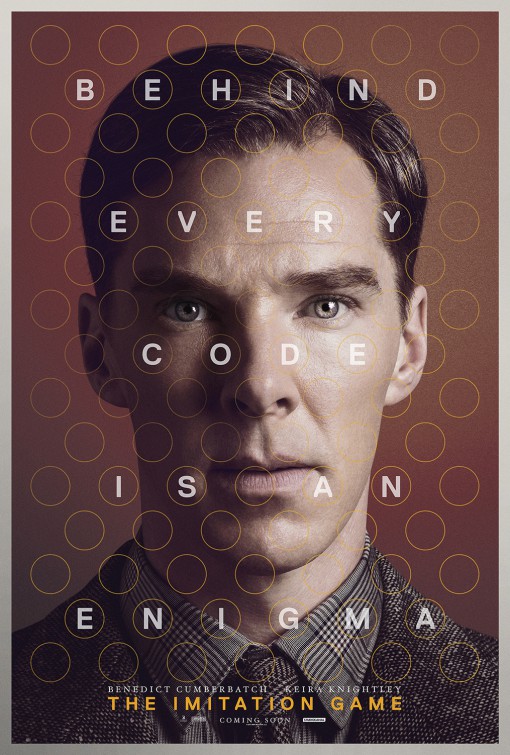
In telling the story of Alan Turing, The Imitation Game is an interesting conglomeration of films and stories, and which one it feels like to you will probably be more a reflection of your interests and views than of the film itself. It could be a World War II movie, about the various efforts by the Allies to gain the upper hand and win the war against the Axis powers in a race against the clock with lives hanging in the balance. It might feel more like a celebration of math and science, of how wars are won with brains instead of brawn, and how one of the first computers was created to solve an unsolvable problem. Or perhaps it’s the story of a brilliant man with a gift to offer society who is unable to find his place or fit in, and how that society he stood to help eventually destroyed him just because he was different. Regardless of which story you might feel you’re watching, the end result is a compelling, driven, expertly crafted film shedding some light on a man and an endeavor with which few are probably familiar.

 In Mad Max: Fury Road, Max drives a tanker truck through a desert wasteland in order to help rescue a group of women from the psychotic warlord who is pursuing them. That’s pretty much the entire plot of Fury Road, but it fails to capture the essence of what is one of the most intense, full-throttle, and absolutely insane action films of all time. But to reduce Fury Road by calling it an “action movie” is to ignore the craftsmanship, storytelling mastery, and the scale of what had to go into this film. Writer/Director George Miller has returned to his original creation 30 years after Max was last seen on the big screen and has managed to build something that feels unlike anything we’ve seen before, yet entirely at home in the universe of Mad Max combining elements of all three previous films. On the one hand, Fury Road defies description; it’s the sort of film that must simply be experienced, preferably on the big screen. But on the other hand, it also provides so much to talk about, from its strong feminist tendencies to its impeccable stuntwork to its brilliantly crafted visuals to its surprisingly clever storytelling. Fury Road is simply one of a kind.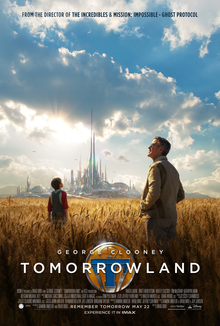


 The Love Pirate