What is Tomorrowland?

Tomorrowland Logo

At the end of my D23 movie news roundup from yesterday I mentioned Tomorrowland.  I didn’t want to go into the film there because I feel like it needs a bit more explanation, especially considering how little we still know of the film.  You have to go back to last year for the earliest reports of the film.  Brad Bird, who wrote and directed The Incredibles and Ratatouille for Disney/Pixar was announced as the director for a new film for Disney, bumping his rumored project with Pixar about the 1906 San Francisco earthquake.  People immediately began speculating that Bird was returning to Disney for a sequel to The Incredibles (something, incidentally, that needs to happen).

That wasn’t the case, however, as the title for his new film was revealed to be 1952.   Continue reading
The Lone Ranger, Critics and the Box Office

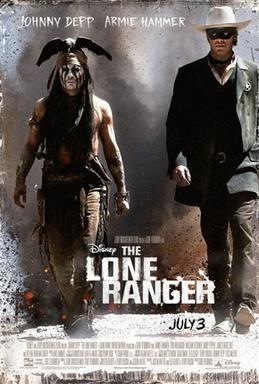
I really hadn’t planned on writing any more about The Lone Ranger, but a series of news articles and quotes that have been floating around this week, along with countless commentary, have me feeling like I should weigh in.  First, Disney has projected that it will lose $160-190 million on The Lone Ranger.  At the same time, or possibly in response to this, several people behind the film have piped up to blame the critics for the box office failure of their film. Continue reading

This is not the Joss Whedon article I intended to write…

I had every intention of writing an article exploring Joss Whedon’s treatment of sex in his various works, and then I started doing some research online.  When I write articles like the one I was envisioning, I worry about unintentionally copying someone else’s ideas, so do a bit of searching to make sure that I still have something new to say.  Sometimes I find that someone else has put out an essay that says exactly what I wanted, only better, and I’ll simply abandon my idea.  Other times, I’ll find an article arguing the opposite of what I want to say, but in a way that allows me to write my opinions as a rebuttal (this worked really well for my Star Wars prequel analysis).  It’s important to read a variety of opinions, because challenging ourselves is the best way to grow, both as a writer/blogger and as a person.

But something different happened to me when I started searching for articles about Joss Whedon and sex.  I still have a lot to say, and maybe I’ll write that analysis soon, but for the moment I’m giving up on it.   Continue reading

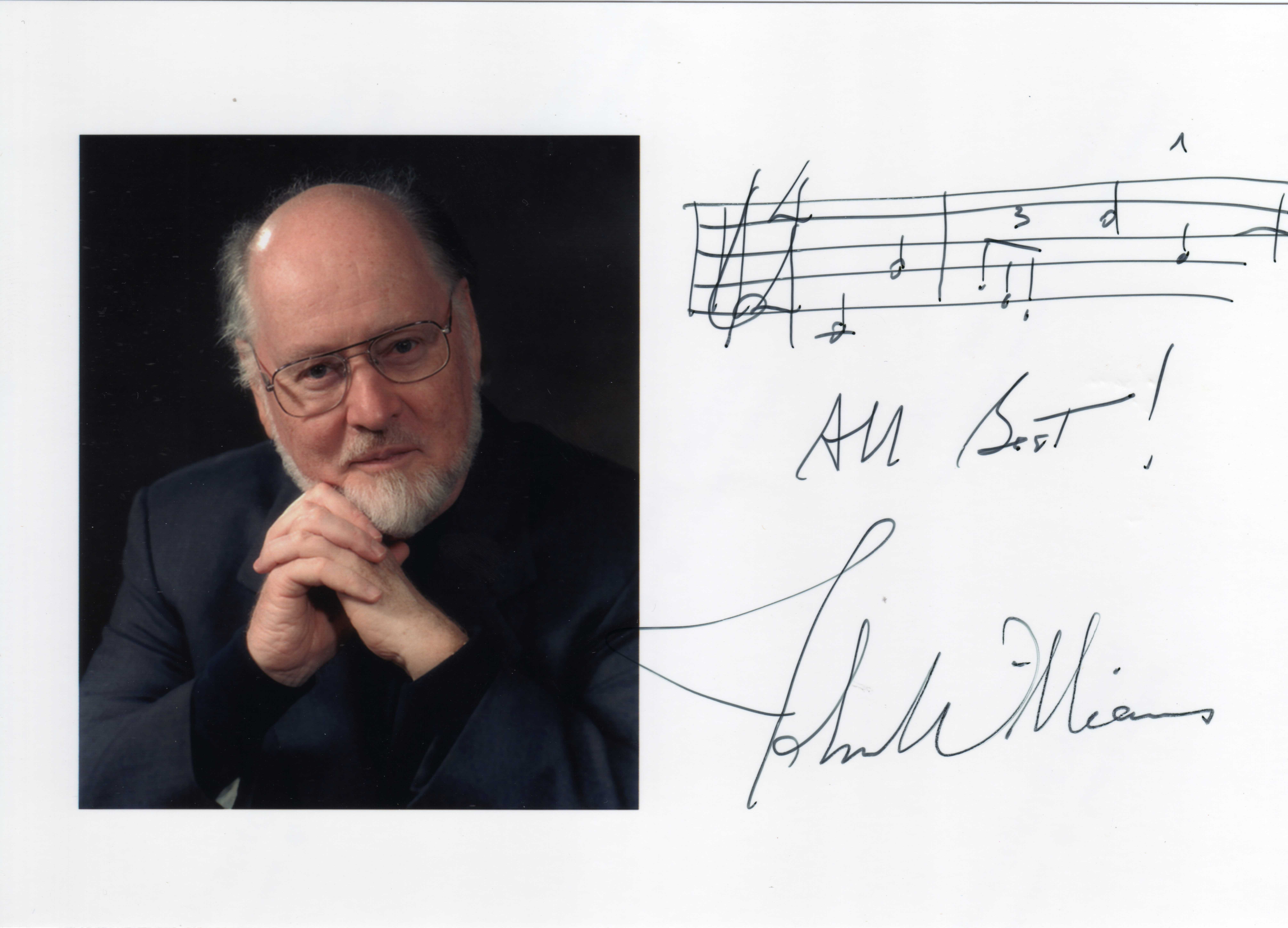
John Williams Returning to Star Wars!

John Williams Autograph

From my autograph collection.

As I’m sure you have read by now, John Williams is returning to compose the score for Star Wars: Episode VII.  This is, of course, fantastic news.  When J.J. Abrams was announced as director, many people assumed that his longtime collaborator, Michael Giacchino would do the score.  This would have been a suitable second choice, as Giacchino is really an excellent composer, and seems to have been very heavily influenced by Williams, but nothing can compare to having Williams back.  He recorded this interview for the Star Wars convention at which his return was announced.  Check it out: Continue reading

How do we deal with Orson Scott Card and the Ender’s Game movie?

The discussion about Ender’s Game has reached a head in the last several days, with new statements from Orson Scott Card, Lionsgate and now with the film appearing at Comic-con, so I thought I’d give my two cents worth.  For those of you who don’t know, Ender’s Game is a science fiction book from 1985 written by Card, which has a movie adaptation of it coming out on November 1st.  I remember reading the book repeatedly in middle school; at the time it was one of my favorites, though I never read any of its sequels.  It wasn’t until later that I learned the truth about Orson Scott Card.

You see, Card is the worst sort of homophobe.   Continue reading

“Time”: An Unconventional Film?

Until last year, the technical aspects of film didn’t get talked about much among the general public.  That changed somewhat last year with the release of The Hobbit: An Unexpected Journey, which was released in both a standard 24 frames-per-second version and a 48fps version.  This brought some of film technology to the forefront of the conversation, if only for a little while (I imagine the discussion will resume this fall with the release of the 2nd film of The Hobbit trilogy).  But it started me thinking both about what is required for something to be considered a movie and how the art of film can be influenced by the different technical options open to storytellers.  There are a myriad of choices, from framerate to aspect ratio, color or black and white, sound or silent, spoken or musical, live action or animated, not to mention all of the different storytelling methods, and all of these choices have an impact on the way the story is told.

What has gotten my attention, and has me questioning what truly defines the film, is a story that is currently being told at the rate of one frame per hour, and has been ongoing since March.  It began with the simple image of two people, and has gradually grown into an epic tale of a journey for answers, all with only one frame per hour.  But here’s the twist, and the reason why people will tell me it’s not a movie: it’s from a webcomic. Continue reading

Review/Analysis: The Lone Ranger

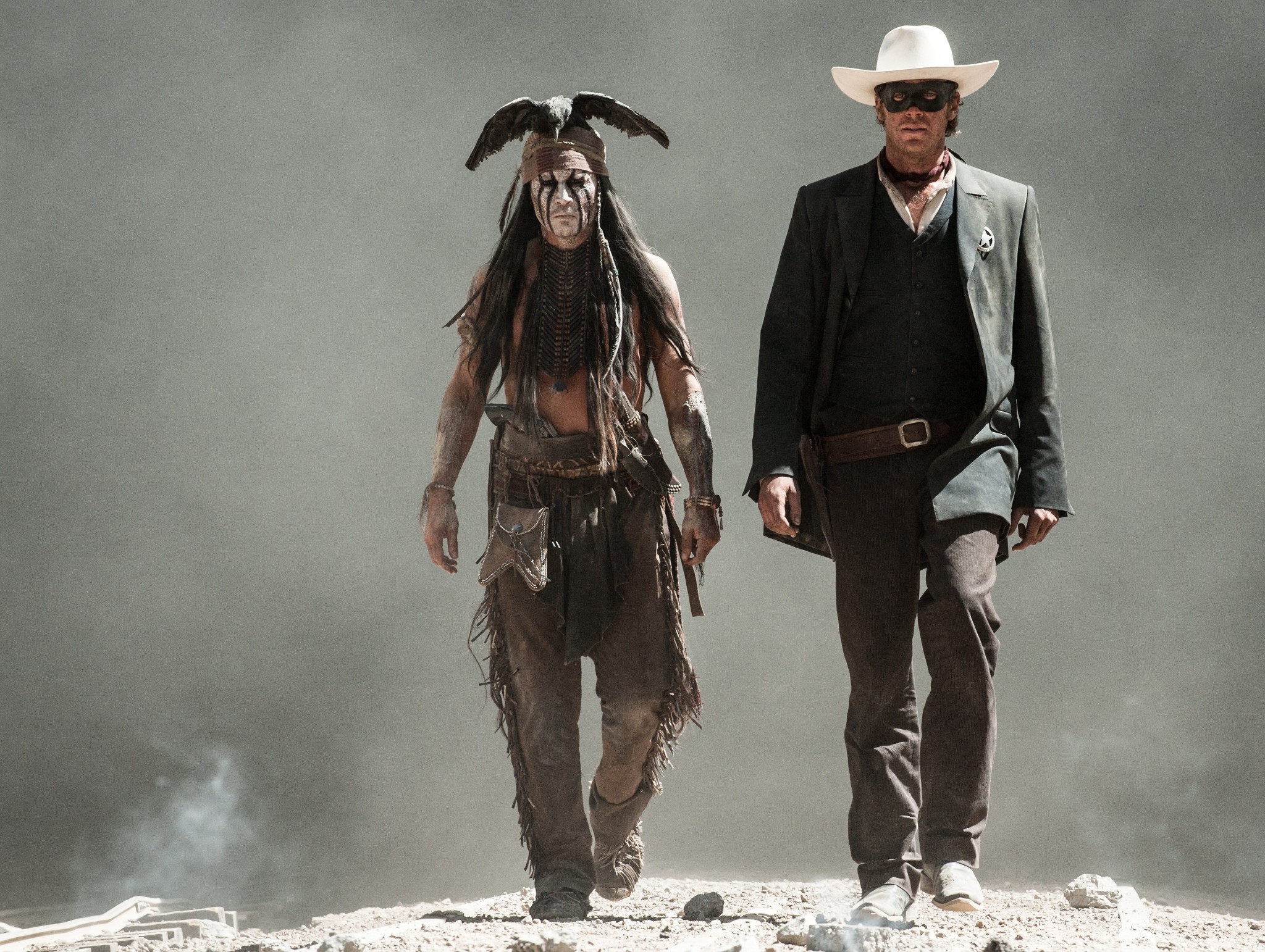
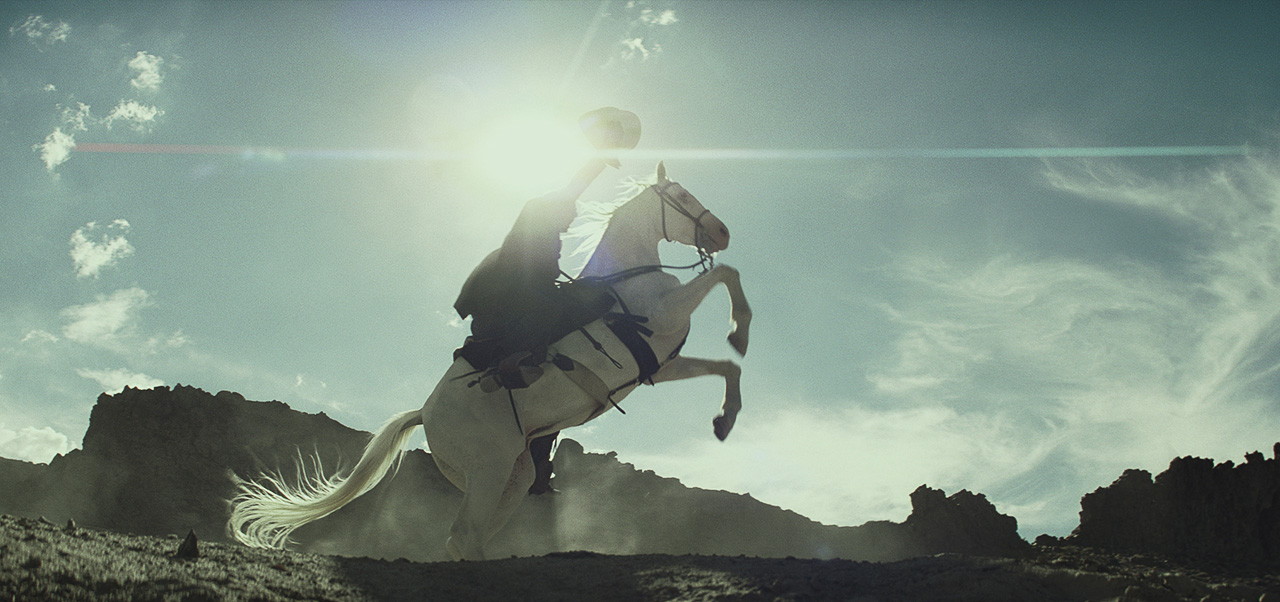
The Lone Ranger is most likely not what you expect, though it probably has at least one or two moments (or silver bullets) aimed at you.  It’s not a devoted adaptation of the beloved TV show from the 50’s or the radio show from the 30’s.  It’s not a “Disneyfied” (hate that word, it’s so condescending) version of a Western, aimed at kids.  It’s not Pirates of the Caribbean on horseback, though your ability to enjoy The Lone Ranger might be related to your ability to enjoy that saga of movies.  It’s not even a live-action adaptation of Rango.  So what is it?

The Lone Ranger is a rip-roaring, funny, violent, subversive, political, Western action extravaganza.   Continue reading

A Critic’s Manifesto

I’ve been watching the Rotten Tomatoes score for The Lone Ranger slowly climb from a rather horrific 17% today, and it’s gotten me thinking about critics and reviews and the movie review industry as a whole.  In fact, I read a blurb from one review that stated, “Everyone wants this to be horrible,” and it makes me wonder how much film reviews in the industry are shaped both by what people expect from a movie, what they want to happen to the movie, and what they think people expect and want the reviews to say.  So if you’ll excuse the rambling, unorganized and meta nature of this post, here are some of my thoughts. Continue reading

What’s your favorite Pixar movie?

With the recent release of Monsters University, many blogs and news sites have been ranking all of the pixar films, so I thought I would do the same with my favorites.  There is some flexibility here, as films tend to move up and down depending on my mood, but the general trend doesn’t change.  (You can also find my ranking of comic book superhero movies here.)  Read on for my list and for a poll.  Let me know what you think in the comments! Continue reading

Why is it so hard to make a good soundtrack album?

The third CD that I ever bought was a film soundtrack (the first two were Michael Jackson’s “Dangerous” and Garth Brooks’ “Greatest Hits”).  It was the soundtrack to Independence Day, and I actually bought it in the hopes of it having R.E.M.’s “It’s the End of the World as We Know It (And I Feel Fine)” which for some reason I really wanted on CD.  I was disappointed when the song was missing from the soundtrack album, but after listening to the CD I realized how much I enjoyed the score, composed by David Arnold.  Thus began my obsession with film scores, and my collection of albums showcasing them.

I’ve been listening to the Jurassic Park soundtrack for the past week or so on my commute to work, and I’ve realized that there are several very big problems with the film score album as a whole in the industry.  I don’t know why it’s so damn hard to put together a decent album from a film score, but I’ve come up with a list of several of the problems: Continue reading