I’m going to try something a little different today. I’ve always liked movies that appear to fit into a particular genre on the surface but in reality the stories are actually from a completely different genre. Sometimes this is intentional, as one setting can be used as an allegory for another, but sometimes it’s just that the trappings of a film hide the fact that the movie isn’t actually about what you think it’s about. One of my favorite films in particular seems to fit this mold, in that it’s nominally about one thing and fits in one particular drama, but the story we’re watching is actually about something completely different that would fit into a different genre. So in the spirit of that idea, I’ve rewritten the story for a particular film in the genre and setting in which I feel it best fits, and your challenge is to guess the movie! I’ve changed the character names and some genders, as well as deleting some subplots or details that would have too easily have given it away. Hopefully this will make you look at the movie (and others if this proves popular) in a different way. So see if you can figure it out:
Category Archives: Movie Analysis
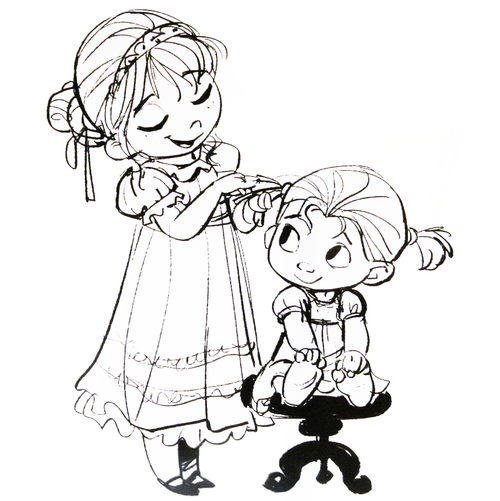
Analysis: The Deleted Songs of Frozen
At this point I’m just going to assume you’ve seen Frozen, or are at least familiar with it and its music. The Oscar-nominated film (Best Animated Feature and Best Original Song for “Let It Go”) is approaching a billion dollars at the box office and its soundtrack was the number one album on the Billboard charts for four weeks and has been certified platinum. It’s been everywhere lately, from its constant position among the box office top 10 to its successful sing-along version to the countless youtube videos of little girls belting out “Let It Go”. There’s even talk of a stage adaptation of the film that’s in the works. And as far as I’m concerned Frozen deserves all of its success.
My Top 10 (and Bottom 3) at the Movies in 2013
Now that 2014 is well under way it’s a good time to look back at the movies of 2013. I went to the movies 40 times in 2013, a pretty low number for me, seeing 32 new films (the other 8 were either movies I saw more than once or classics I got the chance to see on the big screen). Through a variety of reasons, I’ve managed to miss most of the big awards contenders including 12 Years a Slave, American Hustle, Her, Philomena and The Wolf of Wall Street, unlike last year when I had seen most of them. Instead of simply ranking my favorite films from the past year, however, I prefer to highlight my top 10 (and bottom 3) movie-related things from 2013. Some of these will be particular movies or performances, some will be scenes or aspects of production, and some are bits of news or interpretations. I hope you enjoy it, and remember to let me know your favorite (or least favorite) film-related things from 2013! Continue reading
Analysis: Saving Mr. Banks and Disney Ideology
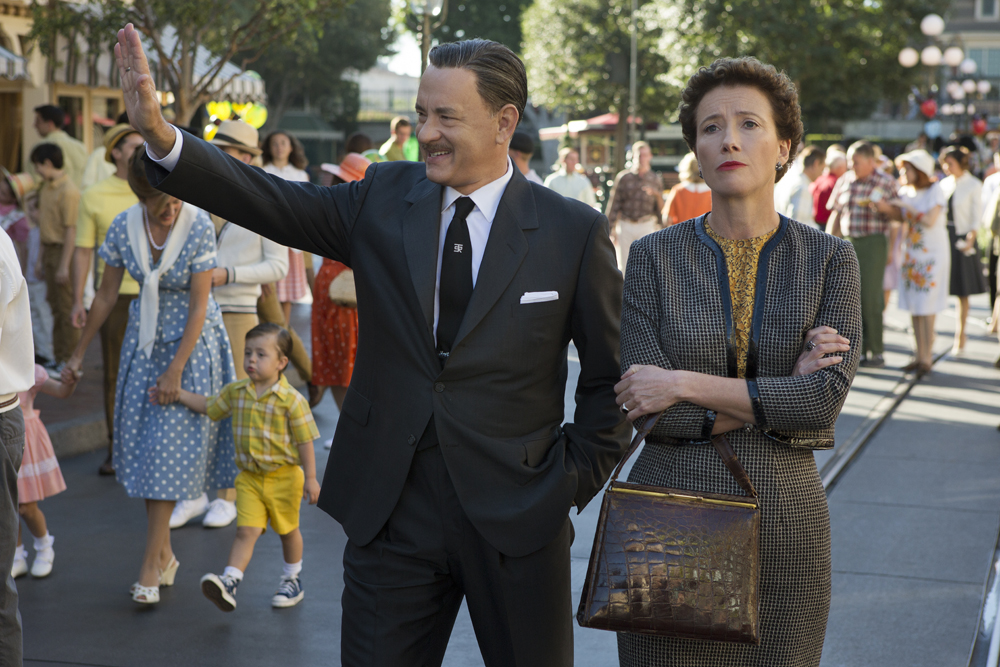
Saving Mr. Banks is an interesting film, and one that’s deeper than it may appear at first glance. The story of P. L. Travers and Walt Disney and the making of the 1964 film Mary Poppins is used as a way to examine how we deal with the harsh realities of the world in which we live and also what responsibilities we have towards preparing children for those realities. It examines how the events of our youth shape our lives as adults and presents some of the choices we can make about how to live our lives. It offers a critique of the pre-judgments that people have a tendency to make, particularly as it pertains to Disney as a man, a company, a brand and an ideology. It defends that ideology specifically, without invalidating other methods of thought. And it has done all of this while facing some surprisingly harsh criticism and claims that the film is nothing but propaganda. I feel like that makes it ripe for some analysis. (Spoilers Below!)
*Disclaimer: For those who regularly read this blog, it’s fairly obvious that I’m a Disney fanatic. I’m a stock-owning, fanclub-card-carrying, happy-to-take-every-vacation-to-the-parks obsessive. I seek out every Disney experience I can find, but more than that I buy into the ideology. Whether that makes me a mindless drone or a corporate stooge (I promise I’m not getting paid by Disney, though I’d love to be) is for someone else to decide. The short of it is that I am in no way unbiased when it comes to Disney, and I’ve defended the company before. And while it hurts whenever something we love is criticized, my goal here is not for this to simply be one more “Disney is awesome and how dare you say otherwise!” post, but instead an examination of the film and what it has to say about varying worldviews and the Disney ideology in particular. Take from it what you will. You can read my review of the film here.
What if there was a Best Voice Performance Oscar? – 2004
(Note: This is a fictional creative thinking exercise, inspired by hours of contemplation of which animated performances have been most worthy of attention over the years. This feature imagines that a Best Voice Performance category was added to the Oscars following Beauty and the Beast’s nomination for Best Picture at the 64th Academy Awards. Each week I’ll cover the hypothetical nominees and winner from one year of animated performances.)
Following the nomination for Andy Serkis at the 76th Academy Awards, audiences looked ahead to 2004 for any other motion capture performances that might also earn a slot among the Best Voice Performance nominees. However, the only potential candidate turned out to be The Polar Express, which most insiders felt did not produce performances worthy of nomination. Instead, discussion focused on a potential Disney/Dreamworks rematch, with a sequel to the film that put Dreamworks on the map and another new film from them on one side and a new traditionally animated film from Disney and the latest Pixar film on the other.
What if there was a Best Voice Performance Oscar? – 2003
(Note: This is a fictional creative writing exercise, inspired by hours of contemplation of which animated performances have been most worthy of attention over the years. This feature imagines that a Best Voice Performance category was added to the Oscars following Beauty and the Beast’s nomination for Best Picture at the 64th Academy Awards. Each week I’ll cover the hypothetical nominees and winner from one year of animated performances.)
After the controversy at the 75th Academy Awards, it seemed all anyone could talk about was Andy Serkis and the eligibility of his portrayal of Gollum in the Lord of the Rings films. His motion capture performance wasn’t nominated either for Best Supporting Actor or Best Voice Performance, and there was considerable debate over whether the acting or the animation branch (or both) would bend and give him the nomination. What the speculators didn’t count on was the arrival of Pixar’s latest film, one which would go on to be regarded as a game-changer in the industry on account of its depth and storytelling.
What if there was a Best Voice Performance Oscar? – 2002
(Note: This is a fictional creative writing exercise, inspired by hours of contemplation of which animated performances have been most worthy of attention over the years. This feature imagines that a Best Voice Performance category was added to the Oscars following Beauty and the Beast’s nomination for Best Picture at the 64th Academy Awards. Each week I’ll cover the hypothetical nominees and winner from one year of animated performances.)
The arrival of Dreamworks Animation on the scene with the success of Shrek, which won both the inaugural Best Animated Feature award and the Best Voice Performance award at the 74th Oscars, was a turning point for the animated industry. No longer was animation the solely linked to Disney, and the result was an expansion of animation and a greater variety of voice roles for famous actors. However, all of that would be overshadowed in 2002 by one single performance. Andy Serkis’s portrayal of Gollum in The Lord of the Rings: The Two Towers was energizing for the industry and immediately led to calls for a Best Supporting Actor nomination for his work in the film, in spite of the fact that the performance used a combination of animation and motion capture instead of the actor actually appearing in the film. It was a foregone conclusion for many that he would automatically receive a nomination in the Best Voice Performance category.
What if there was a Best Voice Performance Oscar? – 2001
(Note: This is a fictional creative writing exercise, inspired by hours of contemplation of which animated performances have been most worthy of attention over the years. This feature imagines that a Best Voice Performance category was added to the Oscars following Beauty and the Beast’s nomination for Best Picture at the 64th Academy Awards. Each week I’ll cover the hypothetical nominees and winner from one year of animated performances.)
At the 73rd Academy Awards, for the third time in the Best Voice Performance category’s short lifespan, four of the nominees were from the same film. This recurring issue caused considerable frustration among Oscar fans, and there was even some talk about doing away with the category in the months after the ceremony. However, 2001 was shaping up to be a more promising year for animation, so much so that a new category was announced for the Oscars, that of Best Animated Feature. This was thought to be an acknowledgement of the progress made by animation, which consistently ranked among the top grossing films of the year and was now attracting some of the top talent in the industry. The question was how this would affect the Best Voice Performance category and whether a winner in one category meant that the film would also win the other.
What if there was a Best Voice Performance Oscar? – 2000
(Note: This is a fictional creative writing exercise, inspired by hours of contemplation of which animated performances have been most worthy of attention over the years. This feature imagines that a Best Voice Performance category was added to the Oscars following Beauty and the Beast’s nomination for Best Picture at the 64th Academy Awards. Each week I’ll cover the hypothetical nominees and winner from one year of animated performances.)
Following what many considered to be a huge upset at the 72nd Academy Awards, at which Vin Diesel beat out Tom Hanks for the Best Voice Performance Oscar, the category gained a reputation for being one of the most unpredictable of the Academy Awards. Since its inception the award occasionally went to the obvious frontrunner, but just as often to a different, more unusual performance, making for interesting viewing but frustrating the odds-makers. The slate of animated films for 2000 offered up no clear smash hits, making prediction even murkier. Continue reading
Gender Inequality in Film
The Thanksgiving holiday still has my schedule screwed up, so there won’t be a Friday Favorite today (not that many people will be disappointed by that). Instead, I present the infographic below produced by the New York Film Academy about inequality in the film industry. While this isn’t exactly news, it’s still shocking and disheartening to see these statistics all grouped together. While I appreciate the Bechdel Test for its ideals, we have to understand that there are plenty of films that pass the test but are derogatory towards women, while some films that feature complex and interesting women characters may not pass the test (Gravity). But the problems that created a need for the Bechdel test go much deeper, and this infographic really shows how far we still have to go for women to be equally represented in the film industry. What are your thoughts? Continue reading