Review/Analysis: After the Dark (aka The Philosophers)

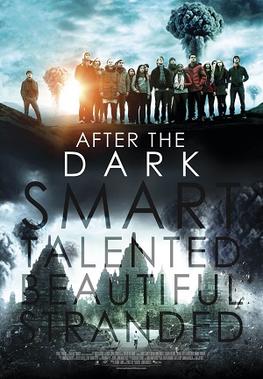
I had come to believe that I’d never get to see The PhilosophersThe trailer came out almost a year ago and I quickly became obsessed with it, but it seemed like the film itself would never materialize.  It made the film festival rounds in 2013 but after that I heard no more about it.  On a whim last week I decided to dig through the internet to see if there was any news about the movie and discovered two surprising pieces of information.  First, The Philosophers had received a new name and was now called After the Dark.  Second, After the Dark had actually received a limited release in theaters last month and was right this second available on demand on my TV.  Needless to say, I jumped at the opportunity to watch the film that had hung steadily at the back of my mind for a year, like an itch I couldn’t scratch, and what I found was something unique and beautiful, that both lived up to my every expectation while subverting them at the same time.

After the Dark tells the story of a philosophy class at an international school in Jakarta, on the seniors’ last day before heading to college.  Continue reading

Review: The Lego Movie

Emmet is an ordinary guy.  There’s nothing distinctive about him at all, in fact.  He gets up in the morning, does his exercises, watches the popular shows on TV, drops his laundry off at the cleaners, buys overpriced coffee, and goes to work at his construction job, all while listening to the most popular song on the radio, “Everything Is Awesome!!!”.  He lives his life by following the instructions, quite literally in this case as he’s a Lego man (minifigure).  His whole life is about following the instructions provided by President Business, whose corporation controls the entire city of Bricksburg, whether they’re instructions on how to make friends and fit in or on how to demolish anything “weird” at his construction job and build bland and “perfect” office buildings in their place.

Continue reading

Review: The Monuments Men

The Monuments Men had a bit of a rocky road to the theaters.  The film, produced, written and directed by George Clooney and featuring an all-star cast, was set for release at the height of Oscar-bait season in mid-December, and audiences had begun to expect big things from it.  Then, news broke that it was being pushed back to a February release, due to difficulty finding the right balance of tone in the editing room (or, depending on who you ask, because they needed more time for the visual effects).  Making a PG-13 World War II movie that focuses not on the war directly but on countless works of art that most audiences have never heard of was always a dicey prospect, and from that perspective The Monuments Men is definitely a success, if perhaps not as much as might have been hoped.

In 1943, as the Allies advance into Europe and the Germans retreat it becomes clear to Frank Stokes (George Clooney) that the cost of the war will be greater than the loss of millions of lives.  Continue reading

Review: Saving Mr. Banks

Mary Poppins is a legendary figure in 20th century pop culture.  From the eight books written by P. L. Travers to the 1964 Disney musical (and the 1984 Soviet version), to the 2004 stage version, to the 30 Mary Poppins’ who showed up at the 2012 London Olympics to vanquish the villains of British literature, there are probably very few people who are not at least familiar with the famous nanny.  But while Travers’ books were famous decades beforehand, most people probably know Mary Poppins through the Disney film, which is one of the most famous and successful films of its time, garnering 13 Oscar nominations (and 5 wins), launching the film career of Julie Andrews, and filling our heads with memorable music.  In fact, I would guess that these days far more people have seen the film than have read the books, and those who have read them most likely did so after seeing the movie.  But what most people probably don’t know, and what Saving Mr. Banks sets out to tell, is the story of how the film was made, and the struggle of Walt Disney and P. L. Travers to find a way to understand each other.

It’s 1961 and Mrs. Travers (as she likes to be called) is having some financial difficulties.  Continue reading

Review: The Hobbit: The Desolation of Smaug

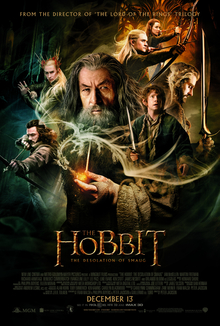
The Two Towers is my favorite film of the Lord of the Rings trilogy.  While most people either preferred the pitch-perfect styling of the first film, or the epic conclusion of the third, for me I thought the middle chapter stood out in an interesting way.  I feel like a lot of the film’s success owed itself to how writer/director Peter Jackson was able to take a book in which little happens and craft it into a satisfying story arc which fit perfectly into the trilogy but also stood alone as a unique accomplishment.  He took the handful of major events in the story and fleshed them out, allowing him to focus much more on character and drama and less on sticking to the detail of the text, and it really showed off his (and his team’s) writing skills.  I had high hopes that The Hobbit: The Desolation of Smaug, the second film of Jackson’s Hobbit trilogy would follow in the footsteps of The Two Towers, and while it’s definitely an excellent film, it lacks the creativity and emotion of his previous middle movie.

The Desolation of Smaug picks up right where An Unexpected Journey left off.  Continue reading

Review: Frozen

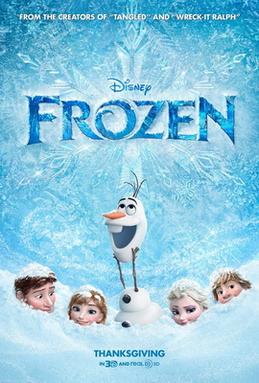
True love, princesses, magic, funny animal sidekicks and fantastic music.  These are the ingredients we expect from a film like Frozen, and it delivers on all of them.  But Frozen is different than anything we’ve seen in the genre from Disney before.  Inspired by the Hans Christian Anderson story, The Snow Queen, it’s fun, funny, emotional and romantic, but it’s also deeper, more interesting and more complex than what we’re used to seeing.  From its top notch cast, to its gorgeous visuals, its outstanding music and its empowering message, Frozen is a must-see for everyone.

Continue reading

Review: The Book Thief

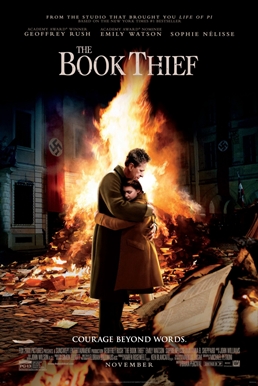
Despite World War II being one of the most frequently depicted events onscreen, and those films spanning a range of genres, from epic war pictures to intimate, tightly-focused narratives and from drama to action to comedy, there have been surprisingly few films released here in the US that tell stories of life for German civilians during the war.  And while The Book Thief, based on the novel by Markus Zusak, may be fictional, it paints a believable picture of what life might have been like in Nazi Germany for the characters.  From the air raids to the pressures of conforming to the Nazi Party, The Book Thief told a story that felt, if not unique, at least outside of the norm.  If in the end it plays things fairly safe, it’s still a beautiful and heart wrenching film with some wonderful performances.

Continue reading

Review: Ender’s Game

Disclaimer:  I feel like everyone has a right to be informed about Orson Scott Card’s views before they decide whether or not to see a film based on his book.  You can read about his statements here.  Considering that the film reflects none of his controversial viewpoints, I personally have no issue with people deciding to see the film, though I also completely understand those who prefer to boycott.  Judging on the box office performance of the film, it doesn’t seem like a decision either way will make much of a difference at this point.  However, it is always good for people to be informed.

I read Orson Scott Card’s 1985 novel, Ender’s Game when I was a kid and I remember loving it.  It was darker and more interesting than most books aimed at my age bracket at the time (I was probably in late elementary or early middle school), and though I never read any of the book’s sequels, prequels or spinoffs the story still stuck strongly in my mind.  The story’s violence, its interesting moral code, its creative universe where kids are destined to be saviors and its surprise ending were thought provoking and entertaining to my younger self.  The new film adaptation is a faithful, well-crafted one, with some gorgeous effects and an outstanding cast, but it fails to capture the excitement or depth of what I remember from the book.  Whether that’s because I’m incorrectly remembering the novel or because I’m older and have different tastes is up for debate. Continue reading

Review: The Hunger Games: Catching Fire

Last year The Hunger Games surprised a lot of people.  It was based on a fairly popular book series, but for most people was something of an unknown.  It featured a handful of familiar faces but no true stars, was directed by a man with only two moderate successes on his resume, and told a story that some found to be conceptually off-putting.  However, all of those potential negatives combined to create something of a phenomenon.  The low-budget aesthetic, gritty storyline and strong performances generated strong word of mouth and the result was one of the biggest success stories of 2012 and nearly $700 million in box office receipts.

For the sequel, The Hunger Games: Catching Fire, things have definitely changed.   Continue reading

Review/Analysis: Thor: The Dark World

Of the Phase One movies of the Marvel Cinematic Universe, Thor was the one that seemed least likely to succeed.  Iron Man felt familiar as a superhero story, while Captain America had a mass appeal, but Thor was unusual.  It had a Shakespearean family drama involving gods combined with a fish-out-of-water story and a bit of romance.  The question was whether viewers could buy an immortal, Norse god as a superhero on the big screen.  It was a surprise success, however, and in my view was the key film in setting up The Avengers, both in laying the plot foundation and in expanding the expectations of audiences.

So here we are two years later with Thor: The Dark World.   Continue reading