For my 40th birthday last month, my wife gifted me a movie obligation. She booked a movie theater and invited our friends to a private showing of a movie of my choice. I have no doubt she had the best of intentions with this kind and thoughtful gift. But now I have the burden of choosing a movie to watch, not just by myself or with the two of us at home, but on the big screen with a group of our friends. And my mom. And maybe our son. It’s a big decision.
Those who know me well know that it’s probably going to be that movie. You know the one. That one that’s been my favorite for decades, that I haven’t gotten to see on the big screen in over 30 years. One that had a very particular connection between my dad and I. The one that helped cement my love of cinema, that has my favorite moment in my favorite scene of all time. Directed by my favorite director and scored by my favorite composer. That one.
Or, it could be that other one. Everyone who knows me knows that other one. That one that’s almost 10 years old now, that felt made just for me, that spoke to the very soul of who I am, who I want to be, and how I define myself. You know the one. That one that underperformed at the box office and quietly disappeared, which I may never get the chance to see on the big screen again. The one I carry a piece of around with me at all times. How could I say no to that one?
There are some rules, of course, both written and unwritten. The theater is booked for 2.5 hours, so no Lord of the Rings marathons. It has to be either something currently showing or something I own on DVD. But beyond that, I have the opinions of a dozen or so other people to consider.
Do I pick a crowd-pleaser? Something I know everyone will like? It’s mostly a group of Millennials and GenX, so there are some obvious ones in there. I could do Back to the Future or The Princess Bride or Jurassic Park, something everyone has seen a million times and knows all the dialogue to. But my mom will also be there, and I should modulate my pick to align with her sensibilities (keep the sex and nudity to a minimum). And what about our 6-year-old son? He’s not specifically invited, and we’ve got a babysitter available, but I’d hate to leave him out. There are a million movies that could work for my friends, my mom, and our son, but they’re all things that most people will probably have watched a million times. And while I could watch The Little Mermaid any day of the week, that doesn’t feel special enough for the event.
Or I could say the hell with everybody else and just pick something for me. I could even broaden some horizons in the process. Why not Apocalypse Now: Redux? Other than the nudity and the running length, I mean. Schindler’s List? It’s the greatest film ever made, but boy would that be a terrible thing to subject your friends to. Ok, how about My Dinner with Andre? Nothing like inviting your friends to watch a movie that put you to sleep the first time you saw it. I adore A Prairie Home Companion, and that would be something different for sure. I know one person who would love to see Geostorm on the big screen again, but it’s not fair to pick a movie just for the two of us. Something weird with subtitles? Brotherhood of the Wolf. The Philosophers would be a fantastic pick, but I don’t know that anyone would appreciate it as much as I would. And there aren’t many feelings worse than showing something you love to people you care about and not getting the reaction you hoped for.
I could do something I love to watch and have seen a million times without getting tired of it. I could do Twister. I love Twister so much. Or Independence Day. How about The Muppet Christmas Carol? Who cares if it’s August? Pirates of the Caribbean? I’d really rather watch At World’s End, but that’s over the running time. Maybe Master and Commander: The Far Side of the World, one of my dad’s favorites. Or Serenity? I’ve managed to see that a bunch of times on the big screen, though. If we’re aiming for things the kiddo can watch, I couldn’t go wrong with WALL-E or Ratatouille. Then again, seeing Speed Racer on the big screen again would be a trip.
Then there’s always Star Wars. But which one? Return of the Jedi is my favorite, but A New Hope is the one people would expect. Rogue One would be a great standalone choice. Or, since it’s for my 40th birthday, I could go with Indiana Jones and the Temple of Doom. It is, after all, the movie that made my mom go into labor with me. Or I could go with a classic that I love, something like High Noon, or Duck Soup, or City Lights. I could go musical. Something more modern like Moulin Rouge or an older favorite like Singin’ in the Rain.
Maybe what I really want is to watch the Bluey episode “The Sign” four times in a row…
You see my dilemma? I’ve got a big decision to make, and one that’ll affect several hours of my friends’ lives. It’s my birthday party, and I really can pick whatever I want, but I can’t just think of myself. And there are just so many choices. But we all know it’ll be that one. You know the one. Who am I trying to kid? It was always going to be that one.
There’s nothing else like Horizon: An American Saga – Chapter 1. That’s both a compliment and a warning. The idea of a 3 hour epic Western from writer/director/producer/star Kevin Costner surely has some amount of appeal, especially for fans of the genre and the name behind it. But this isn’t that, or at least it isn’t just that. This is Chapter 1, the first part of a 4 film saga. It’s important to distinguish that this is not the first film in a series with 3 sequels, it’s literally the first part of a 4 film story. It has no ending. It tells multiple stories that don’t intersect, at least not yet. It has no exposition to set the scene. Events happen, characters come and go, time jumps and skips, and it’s up to the audience to draw connections. It’s barely a movie. It doesn’t even feel like the first part of a miniseries. It’s also kind of brilliant in a way that will probably frustrate the hell out of audiences.
Seeing Chapter 1 is a commitment, and not because of its 3 hour runtime. It’s incomplete in a way that other multi-film sagas try to avoid, meaning we’ll presumably have to watch all 4 parts and 12 hours or so of film to be left with the satisfying conclusion to this story. The Fellowship of the Ring may just be the first part of The Lord of the Rings saga, but each of those films are still built to be satisfying in their own right, with traditional narrative beats, a climax, and some kind of resolution, even as they lead into the next part of the story. Horizon – Chapter 1 does not care about that in the slightest. There is no climax, there are no resolutions to any of the stories, there’s no feeling of completion. Even miniseries generally structure episodes around specific events or characters or themes. Horizon could care less about such mundane things as storytelling structure. It doesn’t think it owes you anything, and that’s honestly kind of new and refreshing. But I can imagine a lot of people who buy tickets to Chapter 1 skipping the remaining chapters until it is completed, and even then maybe not bothering to get back to it.
Horizon‘s story revolves around a proposed settlement in the San Pedro Valley in Arizona. It opens with a surveyor and his son laying out plots of land in a beautiful spot next to a river, while being watched by the local Apache. By the next scene, a traveler finds and buries their dead bodies after following a flyer advertising the town of Horizon. By the next scene, the settlement of Horizon has sprung up across the river from three grave markers that loom as a warning for those who choose to try to make a life in that gorgeous spot. Within minutes, this early tent settlement has been destroyed and many of its inhabitants killed by Apache defending their territory in a sequence of violence and tragedy.
The first hour or more of Horizon plays out that way, painting the landscape of the film with setting, context, and flavor, without spending much time on character. It’s filled with moments, often poignant, among the violence: a family splitting up in the hopes that some of them will survive, a youth on a desperate flight on horseback away from pursuing danger, and many other smaller beats along the way. But unlike traditional storytelling, which establishes characters before events get underway, Horizon spends its time crafting the setting and we watch these events unfold without knowing any of the people involved ahead of time. It’s only later, as the film goes on, that we come to know these characters and the way these events will affect the trajectories of their lives.
As the film progresses, it broadens beyond the area of the potential town of Horizon, and encompasses three main stories with a variety of characters. One follows the immediate area of Horizon, with the survivors of the violence on both sides. There’s a mother and her teenage daughter who lose the two male members of their family and work to build a new life at a nearby US Army camp alongside a compassionate Lieutenant whose men helped rescue them and tend to the survivors. There’s the youth who fled on horseback to alert the army, who lost his entire family, and who signs up with a group from the Army camp to hunt for money the Apache who attacked Horizon, but who have little interest in distinguishing between attackers and the many other tribes who live in the surrounding region. And crucially there are the Apache, and the way the violence divides the tribe between those who see survival as only possible when the invading settlers have been stopped once and for all and those who would rather stay safely in the mountains.
It’s not until over an hour into the film that the other stories start to come into the picture. A woman shoots a man named Sykes and flees with a young child. Kevin Costner’s rustler, Hayes, arrives at a ramshackle town in Wyoming and finds his fate intertwined with a local prostitute and the young child of the family she lives with. Sykes, having survived, sends his adult sons to find the woman and the child and Hayes unknowingly intervenes, tying him to the child and the prostitute he feels a moral obligation to protect. Costner’s role in Chapter 1 is quiet and understated, with hints at the larger role he’ll play in the story. There are unexpected turns on Hayes’s journey, even in this early portion of the story, but the character Costner is inhabiting feels rich with potential if only as a reluctant, but eventual, hero.
The final story we’re treated to in Horizon: Chapter 1 involves a wagon train headed West toward Horizon, and it is filled with more classic Western stereotypes than the others. There’s the upstanding leader of the train, played handsomely by Luke Wilson. There are the city slickers who seem completely out of their element and make his life harder. There are the bad seeds causing trouble. And there’s the threat of the Natives who are facing invasion of their land by an unending sea of settlers. The major storylines never intersect in Chapter 1, but by the end you can feel the pull of each that will lead these characters to cross paths down the road.
Chapter 1 of Horizon culminates in an inevitable, racist tragedy, that I won’t spoil but which you can see coming by the midway point of the film. It’s not in any way a resolution to the film, but it does bookend nicely with the opening of the film, and hammers home what is bound to be one of the key themes of the saga. It’s interesting to me that Horizon bears the subtitle “An American Saga,” because it’s clear that this is intended to be a quintessentially American story. Thematically, however, it’s clear that Costner understands that violence is at the heart of so much of America’s story. It’s inescapable in Western lore, and in Horizon Costner seeks to explore the roots and the consequences of that violence. Key in that exploration is a focus on the victims of the violence, regardless of what side of the fighting they’re on, and particularly the underlying racism that motivated so much violence against the Native population of this country.
It’s telling that the most exciting part of Chapter 1 was a montage at the end teasing Chapter 2. There’s a lot of action in Chapter 1, to be sure, but it’s rarely what I would describe as exciting. Suspenseful might be a better word. This is not Silverado, it feels closer to the early portions of Open Range than anything else, but darker and less humorous. I doubt the Kevin Costner of today would want to make another Silverado anyway, as fun as that film is, because it would feel inauthentic to someone of his age and experience. Plus, movies like that already exist. Nothing like Horizon exists. And that may make things harder for his vision, as Chapter 2 has been postponed to a later date after Chapter 1 underperformed at the box office.
Horizon is beautifully filmed, in a way that feels too easy to say when Westerns have such dramatic landscapes to draw visual inspiration from. But Costner finds ways to use the extended running time of 4 chapters to allow the film to breathe in ways that would generally be overlooked. Early in the film, a youth flees on horseback from an attack, and Costner shoots the horse gallop past the camera as his pursuers follow in the distance. He then holds that shot for a good 45 seconds until the pursuit also passes, to allow the audience to feel and understand the speed of the chase and the distance of the landscape. Very few filmmakers would have the patience for that, or would understand the way it heightens the tension by providing context in a new way. Horizon is filled with moments like that, that helped me appreciate his abilities as a filmmaker, in this genre particularly. Combined with a gorgeous score by John Debney and fantastic costuming and production design, every frame of Horizon feels rich.
Costner has surrounded himself with an outstanding cast, including a selection of friends from his past (Westerns and otherwise). In particular, he’s filled the film with powerful actresses and created around them a story that is very female-centered, even in storylines ostensibly led by male characters. Sienna Miller and newcomer Georgia MacPhail anchor the film as the mother-daughter survivors of the opening massacre, forced to cope with the lost of the rest of their family and trying to find comfort and connection in their new circumstances. Jena Malone commands the screen with a small amount of screentime, while Abbey Lee’s prostitute, Marigold, uses a fiery strength to combat insecurity and fear. Plenty of other familiar faces turn up, some with big roles and others with smaller parts that promise to grow as the story moves on. Sam Worthington is all chivalry and conscience as a cavalry officer, playing off a more world-weary Michael Rooker, while Will Patton, Jeff Fahey, Giovanni Ribisi, and many more make appearances.
I hope they find a way to release Chapter 2, already filmed and completed, in theaters soon. As for 3 and 4, they’re currently being filmed without a distribution deal and with no clear path to audiences. I would absolutely subscribe to a streaming service or buy them on demand if necessary, but I’d deeply lament having to watch them at home instead of on the big screen. I understand the trepidation, however. You can’t imagine that subsequent chapters will have more draw than the first, and I could see a significant fall off in ticket sales by people who might have been disappointed by how open ended and unfinished the story is by the end of Chapter 1. For me, though, it’s been a while since a film held my attention for so long after seeing it, and I’ll be impatiently waiting the future chapters of Horizon: An American Saga whenever and however they find their way to me.
“When I’m stuck with a day That’s gray, and lonely I just stick out my chin And grin, and say, oh The sun’ll come out tomorrow So ya gotta hang on ’till tomorrow Come what may”
-Annie
“Just because you find that life’s not fair, it Doesn’t mean that you just have to grin and bear it If you always take it on the chin and wear it Nothing will change Just because I find myself in this story It doesn’t mean that everything is written for me If I think the ending is fixed already I might as well be saying I think that it’s OK And that’s not right”
-Matilda
I never had much of a relationship with any version of Matilda before the recently released film Matilda the Musical now on Netflix. Despite being a Roald Dahl fan as a kid in the 80’s/90’s, I somehow never read the original story. As a result, I didn’t make an effort to see the 1996 film, which I might have felt a little too old for at the time. The 2011 stage musical, which the new film adapts for the screen, never made it to my home of Tucson on its national tour. So despite a passing familiarity with the story and plenty of opportunities to connect with the material through my 38 years, I went into this new version of Matilda the Musical as a mostly blank slate, with my 4.5-year-old son beside me.
It instantly became our new household obsession. We’ve watched it four times in the last nine days, our son demands the soundtrack to be played at every opportunity, and he requests that I sing its climactic number, “Revolting Children,” for his bedtime song every night. It has spectacularly catchy and clever music, kinetic and exciting choreography, gorgeous production design, excellent performances from both the kids and adults in the cast, and a story that speaks to universal values of justice and equality.
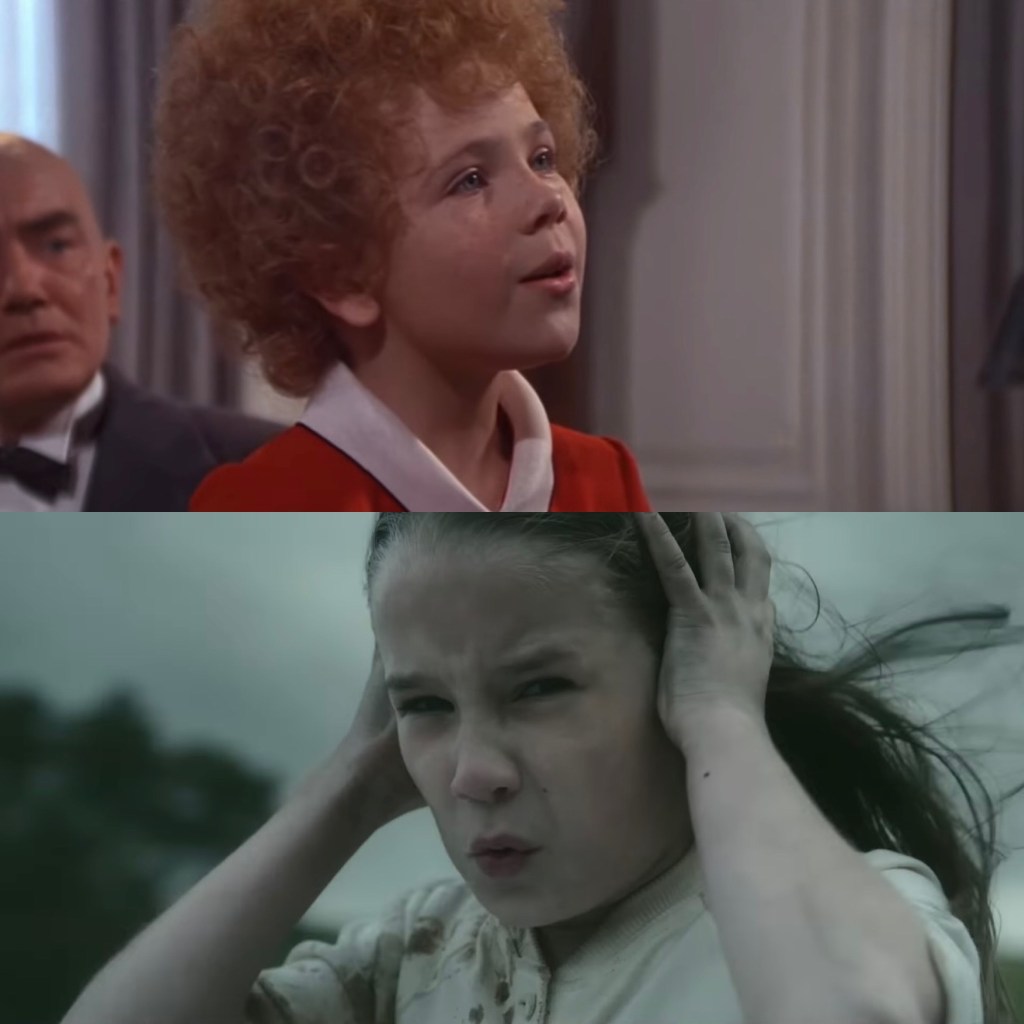
It also has a lot of parallels to the iconic musical Annie, which were brought to the forefront of my mind yesterday when by coincidence my wife and I had tickets to see the current national tour. Our son asked to watch Matilda the Musical yesterday morning and our tickets for Annie were in the afternoon, and the juxtaposition of the two similar musicals in the same day had my mind reeling. Unlike Matilda, I have a long relationship with Annie, which was the first musical I ever saw on stage. My mother and grandmother took me to a performance as a young child, and it ignited my love of musical theater. Those first three dynamite songs (“Maybe,” “Hard Knock Life,” and “Tomorrow”) combined with the strong pull on the heartstrings that comes from Annie calling Sandy and having him come to her captured my imagination. We would have taken our son to Annie yesterday, because he would have loved it, but when the tickets were purchased almost a year ago we didn’t know whether he’d be old enough. (As it is, his first musical theater experience was The Lion King, which isn’t a bad way to go either.)
I love Annie. Its songs are almost all iconic for a reason, even as I notice things now as an adult that I didn’t notice as a kid. For instance, Annie opens with its three best songs in the first 20 minutes, and is forced to reprise them throughout while the remainder of the still-great songs fade in comparison. Still, I sang “Tomorrow” to my son when he was an infant, and I look forward to introducing him to Annie the next time it comes through town. But after watching it and Matilda back to back yesterday, I’m much happier to have my son singing along to Matilda (as he currently is while sitting next to me as I type and we watch it again) than to Annie, despite my love for both.
The Annie vs Matilda dynamic seems to perfectly speak to the generation gaps in today’s society, particularly between Boomers and Millennials. The two musicals, so superficially similar with their plucky young female protagonists, were written for very different audiences in very different times and have very different things to say about children, their places in society, and how they should act. Annie and Matilda, the characters, both start in awful circumstances with evil, neglectful, abusive guardians, come face to face with injustice and inequality, and end their stories in the care of loving, supportive parent figures. Their stories, however, couldn’t be more different, and those differences can tell us a lot about the disconnects between Boomers and Millennials.
Annie first debuted onstage in 1977, with music by Charles Strause, lyrics by Martin Charnin, and a book by Thomas Meehan. It’s based on the “Little Orphan Annie” comic strip which began in 1924 and which spawned film adaptations and a radio show before it made its way to the stage. Its high point of popularity was during the Great Depression and before World War II. As such it wasn’t the childhood staple of Boomers as much as it would have been for their parents, though it would have been regularly published in newspapers during Boomers’ youth.
By the time of the Annie musical, Boomers would have been in their mid 30s, many with Gen-X children of their own to watch it with. The 1930’s setting of the musical, with its hardships of the Depression and the looming prospect of war, was intended to resonate with adult audiences who had lived through their own hardships of the Nixon era and the horrors of the Vietnam War. Its message of optimism and unity in that older era spoke to the need for optimism to try to lift the national mood in the 70’s. I can imagine that message speaking to parents of children who hoped their kids would grow up in a more positive situation.
Matilda, the novel, was published in 1988 and many Millenials doubtlessly grew up with either the book or the popular 1996 Mara Wilson film. By the time the musical debuted in 2011, with music and lyrics by Tim Minchin and a book by Dennis Kelly, those Millennials had grown into young adults of the sort likely to go see a stage version of a story they loved as kids. And now with the movie another decade later, many of us now have children of our own to introduce to the story. But what speaks to us is very different from what spoke to parents of young kids in the 1970’s.
What is Annie’s defining characteristic? What motivates her? How does she follow that motivation and where does it lead her? Annie is primarily defined by her goodness and her sunny optimism. She looks after the other kids in Miss Hannigan’s orphanage, helping them when they wake up crying in the night. She dreams of finding her parents, who left her a note and a locket, and she runs away determined to do so. She has an irrepressibly positive attitude, as we hear in her signature song, and every move she makes is rooted in that attitude.
Matilda’s defining characteristics, on the other hand, are her genius brain and her sense of justice. Her motivations are to learn and to fight for fairness. These lead her to be a troublemaker, to challenge authority, and to ask questions of those in charge. Both girls try to protect their friends and those who are oppressed or down on their luck, but they do it in completely different ways.
Annie shines her positive light to inspire the grownups to be more like her, good and kind. She brings together Republican billionaire Oliver Warbucks and Democrat president Roosevelt (who was hated by “Little Orphan Annie” creator Harold Gray) to catch the bad guys, create the New Deal, and eliminate the Hoovervilles like the one she passes through early in the play. Unity, honesty, and benevolence save the day in Annie’s world.
Matilda inspires those around her as well, but she doesn’t waste her time trying to appeal to the better nature of those in authority. Instead she uses her powers to destroy the tool of Miss Trunchbull’s oppression (the nightmarish “Chokey” dungeon), lends her bravery to her peers so that they stand on their desks in open rebellion against their headmistress, and frightens and then flings her bodily (at least in the new film) from her seat of power. Her righteous anger about the state of things makes her fight back in a way that’s completely foreign to the world of Annie.
The musical Annie treats its children like plot devices. Sure, Annie is a great character, with pluck and wit and charm, with great songs to sing. She sees the good in the world and helps things to turn out better in the end. But other than running away at the beginning she doesn’t actually do much other than be a positive presence. She melts Daddy Warbucks’ heart and inspires Roosevelt and his Cabinet, but she doesn’t drive the plot once Warbucks takes her in. Miss Hannigan’s and Rooster’s plot comes and goes without any particular input from her. Warbucks’ assistant, Grace, first notices the scam and it’s foiled due to Warbucks and his government connections to Roosevelt and the FBI. A wealthy benefactor having his attitude changed just by Annie’s mere presence is all it takes to save the day.
Matilda treats its children like humans, with agency, skills, and power. Matilda, the character, drives the plot. She’s thrown from one awful situation in her home into another awful situation at Trunchbull’s school. She bonds with her schoolmates and helps to protect them when they’re in danger. She uses her cleverness to foil Trunchbull’s plans, and when injustice happens she dares to shout, “No!” in the face of those in charge, inspiring everyone around her. As her power grows and Trunchbull’s rage to match it, she uncovers the headmistress’s evil past, tears down the Chokey, exposes Trunchbull’s crimes, and eventually drives her away for good. All of the positive change happens because of the children, and not Matilda alone. She doesn’t lead the final revolt, though her stands earlier in the film helped inspire the bravery of the others.
Annie and Matilda treat the systems we have to deal with completely differently. Annie sees its conflicts resolved by working within the system to find compromises between those with power to craft a New Deal. The massive amount of unhoused people are helped by being given jobs that will ultimately make one of the richest men on Earth even richer. The rising tide will theoretically lift all boats, and they’ll be well prepared to fight the enemy looming on the horizon, while the rich who never had to suffer any of the hardships of the common folk will continue to thrive. Matilda resolves its larger conflicts by ultimately tearing down the system, removing the unjust from power, and building something completely new. The evil headmistress is banished, the oppressive school is rebuilt into something completely different, and the neglectful parents are sent away. Matilda argues that sometimes there is no common ground, that those in charge who made things the way they are should be removed from power, and that the systems that enable abuses should be dismantled.
Even the good adults of these stories speak to very different values. Daddy Warbucks is one of the richest men in the world, a billionaire among millionaires, who isn’t in any way required to be kind or generous, but ultimately decides to be thanks to the goodness of his adopted daughter. His staff are all kind, good people, but they’re also presumably well paid with a generally benevolent boss in a time when those living in the Hoovervilles would probably do anything for their jobs. Can you imagine a popular musical today where the hero is a billionaire industrialist whose powerful connections help save the day?
Matilda‘s heroic adults are her teacher, Miss Honey, and the operator of the mobile library, Mrs. Phelps (not coincidentally, two women of color). Having a teacher and a librarian as the only two good adults in the story was a move that has only gotten stronger in the decade since the musical debuted, given how threatened our schools and educators, libraries and librarians are these days. Mrs. Phelps offers Matilda a refuge (though she does not know from what), an outlet for her stories and imagination, and an endless supply of knowledge through her books. Miss Honey is just as bullied by Miss Trunchbull as the students, as much of a victim of both the woman in charge and the system as a whole. Miss Honey admits after a question by Matilda that teachers are very poorly paid, and she is paid less than most. She lives in a rundown shack but has come to accept that, “it isn’t much but it is enough for me.”
In the opening number of act two (at least how the story is split on stage), “When I Grow Up,” Miss Honey even joins in singing with the children as they dream about being strong and brave enough to endure the challenges of the world. Miss Honey, relatable to many Millennial adults, still dreams of being those things despite already being an adult, as the system and those in charge treat her as if she is still a simpering child so that all she knows is fear. She is inspired by the children just as Warbucks is in Annie, but she doesn’t need to be inspired to goodness as she already has it within her (something common to the many teachers I know). Instead, she is inspired to have the bravery to fight back against the systems that have oppressed her and those like her, just as the children do.
As nice of a kid as Annie is, the Matilda of the musical is much more the sort of role model I would hope my son would emulate. That’s nothing against optimism, which I also believe is supremely important, but when faced with injustice I would always want my child to fight back, even if it means they have to be “a little bit naughty.” I’d rather have a child who is willing and able to tear down oppressive systems than one who only hopes and waits for things to get better. Many Millennials like myself would love to be Matilda, tearing things down and building something new and better in its place. But we’re more likely to be Miss Honey, quietly trying to do good and be kind in a world that is harsh and unfair. It isn’t much, but sometimes it’s enough or it is all we feel we can do. If we can’t be Matilda, then the best we can do is set up our children to be the fighters we wish we could be.
One of the most powerful moments in Matilda the Musical comes near the end but before Matilda’s final confrontation with Miss Trunchbull. She has discovered her telekinesis when she and the other children were finally pushed too far, when in her head “the noise becomes anger and the anger is light.” Miss Honey takes Matilda back to her shack for a cup of tea, and Matilda learns that Miss Trunchbull was responsible for the deaths of Miss Honey’s parents and her current awful situation. Matilda, resolved now to be proactive in the fight instead of just standing up in the moment, storms off in the rain, ready to do something. Miss Honey stops Matilda and warns her, “You need to be very careful. Miss Trunchbull is… capable of awful things.”
“I’m not scared of her,” Matilda replies.
“You should be,” Miss Honey tells her. “She’s dangerous.”
“So am I.”
Can you imagine anyone describing Annie as dangerous? Can you imagine Annie viewing herself that way? This exchange highlights one of the biggest disconnects of the generation gap in our age. Because the truth is, plenty of older folks do view children (and by extension youth, young adults, and basically anyone younger and more different than themselves) as dangerous. Millennials are used to being blamed by screaming editorials for everything from the trivial to the extreme, as if we’re ruining the world that was carefully crafted by previous generations out of spite or laziness. But while the young are dangerous, as Matilda understands, they’re only dangerous to the obstacles that stand in their way, the injustices and oppression that they see, and the systems and structures that create those things.
When you spend your life being told you’re a nothing and a burden and a waste, as Matilda and her classmates have been, you lose the respect and fear of those systems and structures that help to keep the young and the oppressed in line. That makes the young dangerous and powerful, and it’s why some of the biggest cheerleaders for Gen Z and their disregard for rules and tradition are the Millennials like Miss Honey. And I can only hope the next generation, like my son, are even further freed from those burdens and limitations society tries to set on them, because imagine what a generation of Matildas could create if they didn’t have to focus all of their energy on tearing down the walls built to hold them back.
Matilda inspires me to hope for the future, but not in the style of Annie, where the hope is that everyone will decide to be good and work together. Instead, the hope comes from the belief that the next generation, given the example of Matilda (and Newsies, and other works with similar messages) will fight and win in ways we couldn’t. Annie is an iconic and immensely entertaining piece of musical theater, but today its message of the power of optimism to bring about change merely by existing couldn’t hope to resonate with younger audiences the way Matilda will. (If you want a more challenging and rewarding story of optimism and its place in today’s world, I of course will point you towards Tomorrowland.) I will continue to push my son to be one of Matilda‘s revolting children: one who is dangerous, who won’t let a little thing like being little stop him, and who’s not afraid to get a little bit naughty.
“You mighta’ thought we were weak but we’re strong Mighta’ thought we would break but you’re wrong Because you finally pushed us too far Now there’s no going back ’cause we are … Revolting children Living in revolting times We sing revolting songs Using revolting rhymes We’ll be revolting children Til our revolting’s done It is 2-L-8-4-U We are revolting!”
I haven’t written about movies in over a year and a half, so please bear with me. I just couldn’t let a Star Wars movie pass without making an attempt. This first review section will be spoiler-free, while the second section will be spoiler-filled and have ample warning before you get to it.
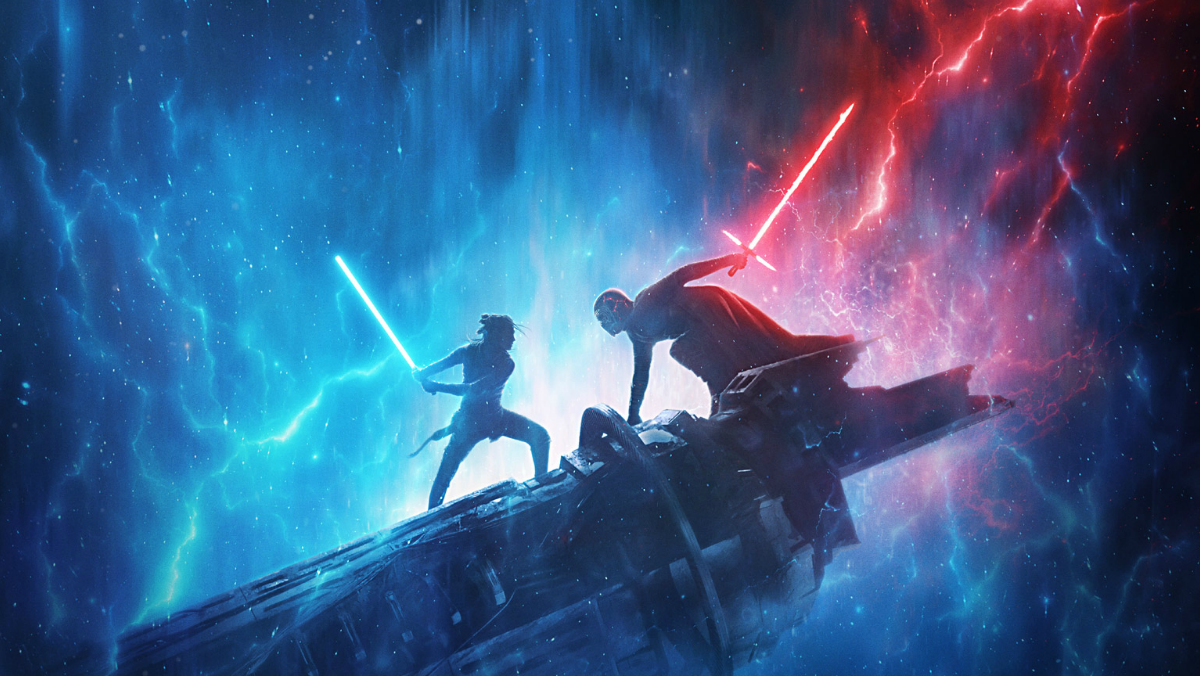
Star Wars: The Rise of Skywalker is a mess. It’s also highly enjoyable. It is satisfying. It is disappointing. It is lazy, pandering, and focus-grouped. It is emotional, heartfelt, and genuine. It honors the legacy and themes of the entire saga. It misunderstands what Star Wars is about. It is silly and dumb. It is a thought-provoking discussion-starter. It is unpredictable. It is so predictable. It wastes characters. It gives characters the opportunity to shine. It answers many questions. It wastes many opportunities. It is the safest Star Wars ever. It is the craziest Star Wars ever.
The best description of The Rise of Skywalker is one I’ve seen making the rounds quite a bit. It is “a lot.” I truly did enjoy it but I can’t honestly say it’s very good. One of the benefits to it simply being “a lot,” jam packed with plot and answers and action and humor and moments to cheer, is that there’s something for almost everyone to like. Conversely, there’s something to bother almost everyone. I feel like The Rise of Skywalker, and perhaps the sequel trilogy as a whole when people look back on it, will end up being a Rorschach test for how people feel about Star Wars and how they approach storytelling generally and the revival of beloved franchises specifically.
On the whole, though, I enjoyed The Rise of Skywalker. It has humor and heart, it serves as a broadly satisfying close on the story of the Skywalkers, and it is generally fun. It has some of the best performances of this sequel trilogy, particularly from Daisy Ridley as Rey and Adam Driver as Kylo Ren, while Anthony Daniels gets to shine as the inexhaustible C-3PO. JJ Abrams and company manage to do a good job crafting a final role for Leia from Carrie Fisher’s deleted scenes from The Force Awakens, and it would have felt wrong for her not to be there. There are moments in the film that made me cheer, made my heart swell, and brought tears to my eyes (an admittedly easy feat).
But I wouldn’t call The Rise of Skywalker a particularly great movie. The script from Abrams and Chris Terrio is riddled with coincidences, plot holes, unexplained important events, and occasionally flat dialogue. Rose has been relegated to a criminally minor supporting role, but even Poe and Finn (who had great arcs in The Last Jedi) are mostly misused. There are new characters like Naomi Ackie’s Jannah and Keri Russell’s Zorii Bliss who are nice additions but aren’t given much of a chance to make an impact in a script that is too stuffed to let things breathe. So much of the movie is devoted to action/plot or to the Rey/Kylo/Palpatine triangle that there’s hardly room for anything else.
The Rise of Skywalker has about 50% too much plot. It’s too obsessed with answering questions that didn’t need answering, and with throwing bones to fans who didn’t like The Last Jedi. It’s never openly antagonistic to Rian Johnson’s vastly superior film, but there’s enough of a course correction there to please fans who felt burned by the previous movie. It feels like it was constructed by committee who sent out surveys to fans on what they’d want to see from the final chapter and wrote the script based on the statistics of the responses. The result isn’t bad, per se, it’s just lazy and pandering, not to mention often extremely predictable.
My ultimate conclusion is that JJ Abrams is a great trailer director. What I mean by that is that he knows how to engage an audience from the start, and he has far less interest in the story as a whole or its conclusion. (And this is coming from someone who deeply loves Super 8.) The sequel trilogy suffers from not having a plan from the start, with Abrams doing his thing (like he did on Lost) getting the ball rolling and letting other people sort things out from there. It really illustrates the limits of “mystery box” storytelling, and I hope Lucasfilm finds a new method going forward. The trilogy was redeemed in my eyes by Rian Johnson’s middle chapter, and from that perspective The Rise of Skywalker is an enjoyable but only serviceable finale.
I’m sure my thoughts and feelings about this Episode 9 will change over time. I wasn’t particularly a fan of The Force Awakens when it first came out, and some things about it still bother me, but it’s grown on me over the last few years, largely due to the strength of the characters it created. I went into The Rise of Skywalker with lower expectations than I usually would for a Star Wars film, and came away generally pleased and entertained. My childhood wasn’t ruined, the sequel trilogy wasn’t ruined for me, and I’m eager for more Star Wars in the weeks, months, and years ahead. It’s still a mess, with some objectively bad mistakes and missteps as well as some things that just didn’t work for me personally, but I’m looking forward to watching it again. The last four years have brought us five Star Wars movies, ranging from spectacular to just fine, and if this is the way this period ends I’m ok with that.
B+
***Spoilers Below***
So Rey is a Palpatine. It was one of the popular theories, and one that seemed more and more likely to me once it was announced that Palpatine would return for TROS. (Even if I originally assumed she was Luke’s daughter after TFA.) Generally, I’m ok with her being a Palpatine even if it wasn’t what I would have preferred. I liked the idea from TLJ that she really was a nobody, and the idea that you don’t have to come from some famous background to be a hero or be important. On the other hand, there’s something to be said for the more broad idea that you’re not defined by your background, and your name or your parents are not responsible for your legacy. Rey is able to set aside her shameful family name and her evil grandfather and choose a family and a name that has more meaning to her. Star Wars has always been about the families you create being more important than those you’re born with, so in that sense it fits thematically.
Rey’s struggle throughout the trilogy has been about identity. First she defined herself solely by the parents she was waiting for and the longing she had for a family that wanted her. She learned to stop waiting for that family and went looking for “someone to show me my place” in TLJ. But she eventually learned that she alone was enough, and she didn’t need to be defined by a family she had waited for that would never come back. In ROTS she learns she’s a Palpatine and that her parents abandoned her for her own safety, which is kind of a cop out from TLJ’s claim that they sold her for drinking money, but both have enough truth to work with the “certain point of view” theme that is a constant through Star Wars. And I could totally see how choosing the Skywalker name could feel like a step backwards for many people, but I look at it as coming full circle for her, not waiting for someone to bring her meaning, and no longer feeling like she has to stand alone, she chooses to take the name of those who meant so much to her, to keep what they fought for alive in a way that is stronger than blood.
I appreciated the return to Tattooine as a fan, but it doesn’t make a lot of sense as a final resting place for the lightsabers from Rey’s perspective. Leia has no connection to the Lars homestead, but whatever. It’s symbolic more for the story than for the literal actions of the character. What I don’t understand is people claiming online that the scene means Rey is going to now live there? That doesn’t seem implied or stated by the scene at all. I guess it comes from the title of the track on the soundtrack, “A New Home,” but I think believing Rey is actually going to live there seems like a misreading of the character even in a movie as messy as TROS. I kind of hope that she took the kyber crystals from the two sabers and is using them in her new, yellow saber, though.
Then there’s Ben Solo. I haven’t been a fan of Kylo Ren at all. I thought he made for an interesting villain, but I wasn’t eager to see his redemption and I certainly didn’t ship him and Rey. But I very much enjoyed his arc in TROS, and especially Adam Driver’s performance. I appreciate that he was able to be redeemed as Ben Solo without an unrealistically happy ending after participating in the murder of billions with Starkiller Base. I don’t think I would have been able to buy that, though had he survived and gone into hiding to do atone in secret I could have accepted that too. There’s definitely some nice parallels to Anakin with Ben having the power to bring Rey back from death, and his sacrifice was a fitting end to the Skywalker line, a line of Jedi who came into being to balance out Palpatine’s rise and which ended with Palpatine’s fall. I can get on board with that. The scene with his memory of his father was an emotional, but predictable, surprise, and I especially love that his mother was the one to turn him and Rey back from the darkness. Driver really sold the transformation, and his wordless performance as Ben for the rest of the film was truly special.
I’ve admitted to not being a Reylo shipper, and I’m happy to admit that shipping has never been a particularly passionate thing to me in fandoms generally. I enjoy the anticipation of possible relationships, and I definitely have couples I ship, but I’m rarely too upset when things don’t work out. But I also recognize that as a man there is probably something significant I’m missing in Reylo, so I’m trying to do my part to listen to why some people are so upset. I know many women identify with Rey and were thrilled to have a character they could see themselves in in Star Wars. So I can see how it feels like a betrayal that the relationship between Rey and Ben ends in tragedy because it feels like the powers that be are saying to women that they simply can’t have it all. They can be heroes but they have to be alone. I don’t personally read the story that way, but I can definitely see how it would feel like that kind of statement and I have no interest in dismissing that pain or that interpretation. I believe and I hope that Rey goes on to a full and happy life with her friends Finn and Poe and Rose and the droids, finds love and happiness and family and gets to continue being a hero to the galaxy. I don’t think the film contradicts that vision, it just doesn’t take the opportunity to show that a woman can have it all, which is understandably like a betrayal to many.
Speaking of Finn and Poe, what a wasted opportunity for the two of them. There are racial implications to Poe’s backstory as a drug smuggler that I don’t feel qualified to address and which I admit didn’t occur to me until they were pointed out. After all of his growth in TLJ, he basically became Han Solo this time around. Finn had one great scene with Jannah about leaving the First Order, but that was most of his story, too. Apparently his secret for Rey is that he’s Force sensitive? I don’t have an issue with it, but it didn’t add anything to the film and felt kind of tacked on. Really, the biggest missed opportunity was for Finn and Poe to become a couple, which would have worked so well in the film’s finale, but I have no doubt the powers that be weren’t ready to go that bold. LGBTQ+ representation is extremely important, and it’s no small deal that TROS has the first onscreen same sex kiss for Star Wars. But how awesome would have been for Finn and Poe to kiss upon their reunion? That could have been Finn’s secret.
I don’t really know what to say about Palpatine being the puppet master this whole time. It seems like it was the easy decision for the production team to make to please fans and find a way to wrap up the trilogy where they clearly didn’t have a plan. I don’t particularly care that Snoke was grown in a vat, but I don’t have a problem with it either. I can accept Palpatine surviving the end of Return of the Jedi even if it’s inherently silly. It’s just… fine. The Palpatine stuff was the least interesting aspect of the film for me, and this is from someone who loves Palpatine in all of the Lucas films. He’s a fascinating character in the prequels and in ROTJ, but here he was just kind of cartoonish. He’s probably the only villain that would have felt big enough and provide enough of a threat to work with Rey and Ben’s story, so it’s fine from that standpoint, it just wasn’t super interesting to me.
I was kind of overwhelmed by the Jedi voices encouraging Rey, so I’ll have to pay closer attention on the next viewing, but I love that they brought in more than just the obvious ones from the films. Nice to hear Ahsoka and Kanan! As far as other cameos, it was nice to see the Ghost from Rebels and Wedge return in the finale (though right after Wedge lost his adopted son, Snap), and I’ll be curious to watch people dissect the footage as time goes on to see what other hidden gems are scattered among the fleet. I loved the “They’re not a navy, they’re just… people” line so much, and it was one of the most Star Wars lines in the film. The idea that “Rebellions are built on Hope” is one I cling to desperately, and I loved the idea in this film that villains win by making people feel alone.
There’s a lot of healthy debate going on about how much TROS was intended to undo TLJ, but a lot of that comes from having lived the fan backlash the last two years. It would be impossible for the experience of watching the movie not to be colored by everything that has happened. But for the most part I read a lot of the “corrections” as growth and development rather than antipathy towards TLJ. Things like Luke preventing Rey from destroying the lightsaber feel like Luke acknowledging his failures, something that feels very in tune with his character growth in TLJ and Yoda’s lesson for him. I choose not to buy into the theory that JJ and Rian hate each other and there’s some kind of war between them. That’s just silly to me, even if they have very different styles of filmmaking and storytelling.
In all, I’m curious to see how and if my feelings about The Rise of Skywalker change with time and repeat viewings. I know I won’t become more accepting of things like the sidelining of Rose or the flattening of Poe and Finn. But things like the overstuffed plot and the Palpatine stuff that I’m neutral on now could go either way. Could I go back in time I would have given this trilogy to a single director, or at least found someone with a singular vision for the sequels. I don’t begrudge anyone being disappointed or hurt, but for now I’m choosing to be positive. It doesn’t undo the things I found most meaningful in The Last Jedi, particularly Luke’s story. It gives Leia a loving ending and Carrie a beautiful sendoff. It leaves the door open for more adventures while putting a reasonably satisfying cap on the Skywalker Saga. And Rogue One still exists. I can be happy with this messy, pandering film for now, and maybe one day I’ll grow to love it.
When I tell people that my favorite director is Steven Spielberg, I tend to get a lot of eye rolls from fellow movie buffs. He’s considered too popular or mainstream, he plays it too safe and isn’t edgy or artistic enough, he’s too sentimental and melodramatic, his only interest is in spectacle, etc. Cinephiles love to hate on the man who is probably the most successful (critically and commercially) filmmaker of the last fifty years, and are often quick to point out alternative artists who they feel has a similar career but does everything better (Christopher Nolan frequently pops up in these discussions). But from now on when anyone brings up these hackneyed Spielberg criticisms I will simply point them to one scene from The Post and ask them to show me another filmmaker who could make that scene any better.
I’ve always loved the phrase “more than the sum of its parts,” particularly when it comes to film. Like any view on movies it’s an entirely subjective opinion, but it’s a phrase I’ve been known to use. I appreciate the fact that it so easily communicates a quality that can be unique to film, that sometimes a movie rises above the potentially mediocre pieces from which it is assembled to become something more. We all have movies that feel this way to us, that have poor acting, an uninspired story, or other faults, yet still manages to capture our hearts. However, there is of course another side to this coin. Some movies have wonderful individual moments, whether great acting, an engaging story, or beautiful production design, yet they leave you feeling disappointed, as though they’re wasting the enjoyable bits. So despite loving much of The Greatest Showman, including its performances, many of its musical numbers, and its message, I was left feeling like it was less than the sum of its parts.
Star Wars: The Last Jedi is the film that finally allowed me to be at peace with the new trilogy of Star Wars movies. There was a lot that I loved about The Force Awakens two years ago. I thought the new cast of characters were all compelling, particularly Rey and Finn. I enjoyed seeing the old favorites back, I appreciated the way it tried to honor the films that came before, and generally found it to be both a fun ride and an emotional experience. At the same time, there were a number of things in The Force Awakens that did not sit well with me, which ultimately served as distractions from the experience. I felt its tone was inconsistent and its humor occasionally felt forced or like it didn’t fit stylistically within the greater Star Wars saga. It occasionally felt too much like fan fiction (and I don’t mean that as a compliment), and it tried too hard to try to distance itself from the prequels. It also was far too much of a remake of A New Hope, which is not a huge deal for me the way it is for other people but which felt kind of lazy. Most of all, it bothered me that they were continuing the main series of films without George Lucas, and in fact intentionally disregarding any plans he might have had for them. I understand why they did it, but The Force Awakens did not justify these new uncharted waters they were sailing. (On the other hand, I 100% love Rogue One, even if its characters aren’t nearly as strong as those in The Force Awakens.)
In an effort to cut through the backlog of movies left to review after everything that’s happened the last couple of years, I’m going back to movies I skipped and giving them each 5 Things. These can be things I loved, things I hated, or anything in between, they’re just 5 thoughts I had about the movie. Today I’m tackling Moana, one of my favorite movies of 2016, and probably my favorite Disney animated film since Tangled. I gave it an A+ in my movie log at the time I saw it, and I probably love it even more today than I did then. It’s gorgeous, has fantastic music, and characters I find immensely relatable and compelling. So without further ado, here are 5 Things I Love about Moana!
I’ve never liked the phrase “so bad, it’s good” when it comes to movies, even though I’ve used it myself. The truth is it can occasionally be the perfect description for a movie that is enjoyable not in spite of its badness but because of it. But I don’t subscribe to the notion of film quality as something quantitative that can be numerically measured, even though we all give grades to movies. I especially don’t think that there’s some hypothetical badness line where once you cross it a movie suddenly becomes good again. There are plenty of bad movies that I genuinely like, but also plenty of “equally” bad movies that are just torture to watch with no possibility of enjoyment whatsoever. But beyond this philosophical disagreement with the idea of a “so bad, it’s good” movie, I’m not a fan of movies that intentionally strive to be terrible with the hopes of crossing that imaginary barrier into the “so bad, it’s good” realm. The Sharknado series comes to mind, which works very hard to be bad in order to try to capture an audience that might be out there looking for the next sublime failure. That sort of thing holds no interest to me. “So bad, it’s good” movies are ultimately a very personal thing, just like all movies are. What I might love in an awful movie someone else might find insufferable, and simply having a bad story, bad acting, bad writing, or bad directing isn’t necessarily going to make something likable. Making a great, bad movie is much more difficult than that, but it also requires a very subjective reaction. So when I say that Geostorm is dumb, loud, clumsy, and ridiculous, know that it’s an objectively poor film. But when I also say that watching it was one of the most enjoyable experiences I’ve had in a movie theater in many years, know also that I enjoyed it both because of its badness and because of my own personal preferences when it comes to bad entertainment.
Note: I’m changing the way I write movie reviews. Longtime readers have probably noticed that I haven’t written nearly as much here on the site as I used to. There are a host of reasons for that, not the least of which is the fact that my wife and I are expecting a baby later this month. I’d like to get back to writing more often, and one of the ways I want to do that is to be a little less structured in what I write. I’ve always felt a need to adhere to a certain formula with my movie reviews, but I’ve realized that I’ve grown a bit weary of the routine. I always have many thoughts about movies I see, but I’m more likely to share those thoughts if I allow myself to be freer. So in my reviews from now on I’m not going to feel the need to talk about aspects of the film that don’t interest me. I’m not going to go out of my way to recap the plot, point out all of the major cast members, or comment on aspects of the production that didn’t provoke a reaction. Also, since I’m a lot slower to write reviews than I used to be, I’m not going to shy away from some minor spoilers. Anything major I want to talk about will still go below a spoiler warning, but I’m going to assume that major spoilerphobes will have seen the film by the time I get around to writing about it. I may also post reviews in a wider variety of lengths, letting myself ramble on when I have more to say but not forcing myself to write more than I want. Hopefully this will all allow for more frequent updates and a more pleasant and interesting reading experience. As always, thanks for reading!
There’s no logical reason for Logan to be as good as it is. Wolverine’s two previous solo outings have varied from mediocre and disappointing to flat-out horrible, and the most recent X-Men movies haven’t been substantially better. It’s been 14 years since the last movie in this disjointed series which I wholeheartedly loved, X2, which still stands as one of my favorite superhero films. Honestly at this point I would be more than happy to see the series die, to give these characters a much needed rest. Logan marks the 9th film in the X-Franchise (not counting Deadpool), and at this point there should be very little left to say about these characters. I know that Hollywood is a business, and FOX will continue exploiting this familiar territory for the brand recognition alone, but they’ve retread the same ground over and over again with nothing new to contribute so often that I’ve grown weary of the entire endeavor. I didn’t even really want to see Logan, I was wary of being burned again after The Wolverine started with such promise and ended up so disappointing. So when I say that Logan is a genuinely good film, and it even has moments of greatness, understand that while this is coming from a place of low expectations I’m not judging merely judging this on a curve. Logan is a fitting companion to the original X-Men films, good enough to almost make it worth slogging through some of the more recent movies in order to reach this point, and far better than it has any right to be.




 The Love Pirate