For my 40th birthday last month, my wife gifted me a movie obligation. She booked a movie theater and invited our friends to a private showing of a movie of my choice. I have no doubt she had the best of intentions with this kind and thoughtful gift. But now I have the burden of choosing a movie to watch, not just by myself or with the two of us at home, but on the big screen with a group of our friends. And my mom. And maybe our son. It’s a big decision.
Those who know me well know that it’s probably going to be that movie. You know the one. That one that’s been my favorite for decades, that I haven’t gotten to see on the big screen in over 30 years. One that had a very particular connection between my dad and I. The one that helped cement my love of cinema, that has my favorite moment in my favorite scene of all time. Directed by my favorite director and scored by my favorite composer. That one.
Or, it could be that other one. Everyone who knows me knows that other one. That one that’s almost 10 years old now, that felt made just for me, that spoke to the very soul of who I am, who I want to be, and how I define myself. You know the one. That one that underperformed at the box office and quietly disappeared, which I may never get the chance to see on the big screen again. The one I carry a piece of around with me at all times. How could I say no to that one?
There are some rules, of course, both written and unwritten. The theater is booked for 2.5 hours, so no Lord of the Rings marathons. It has to be either something currently showing or something I own on DVD. But beyond that, I have the opinions of a dozen or so other people to consider.
Do I pick a crowd-pleaser? Something I know everyone will like? It’s mostly a group of Millennials and GenX, so there are some obvious ones in there. I could do Back to the Future or The Princess Bride or Jurassic Park, something everyone has seen a million times and knows all the dialogue to. But my mom will also be there, and I should modulate my pick to align with her sensibilities (keep the sex and nudity to a minimum). And what about our 6-year-old son? He’s not specifically invited, and we’ve got a babysitter available, but I’d hate to leave him out. There are a million movies that could work for my friends, my mom, and our son, but they’re all things that most people will probably have watched a million times. And while I could watch The Little Mermaid any day of the week, that doesn’t feel special enough for the event.
Or I could say the hell with everybody else and just pick something for me. I could even broaden some horizons in the process. Why not Apocalypse Now: Redux? Other than the nudity and the running length, I mean. Schindler’s List? It’s the greatest film ever made, but boy would that be a terrible thing to subject your friends to. Ok, how about My Dinner with Andre? Nothing like inviting your friends to watch a movie that put you to sleep the first time you saw it. I adore A Prairie Home Companion, and that would be something different for sure. I know one person who would love to see Geostorm on the big screen again, but it’s not fair to pick a movie just for the two of us. Something weird with subtitles? Brotherhood of the Wolf. The Philosophers would be a fantastic pick, but I don’t know that anyone would appreciate it as much as I would. And there aren’t many feelings worse than showing something you love to people you care about and not getting the reaction you hoped for.
I could do something I love to watch and have seen a million times without getting tired of it. I could do Twister. I love Twister so much. Or Independence Day. How about The Muppet Christmas Carol? Who cares if it’s August? Pirates of the Caribbean? I’d really rather watch At World’s End, but that’s over the running time. Maybe Master and Commander: The Far Side of the World, one of my dad’s favorites. Or Serenity? I’ve managed to see that a bunch of times on the big screen, though. If we’re aiming for things the kiddo can watch, I couldn’t go wrong with WALL-E or Ratatouille. Then again, seeing Speed Racer on the big screen again would be a trip.
Then there’s always Star Wars. But which one? Return of the Jedi is my favorite, but A New Hope is the one people would expect. Rogue One would be a great standalone choice. Or, since it’s for my 40th birthday, I could go with Indiana Jones and the Temple of Doom. It is, after all, the movie that made my mom go into labor with me. Or I could go with a classic that I love, something like High Noon, or Duck Soup, or City Lights. I could go musical. Something more modern like Moulin Rouge or an older favorite like Singin’ in the Rain.
Maybe what I really want is to watch the Bluey episode “The Sign” four times in a row…
You see my dilemma? I’ve got a big decision to make, and one that’ll affect several hours of my friends’ lives. It’s my birthday party, and I really can pick whatever I want, but I can’t just think of myself. And there are just so many choices. But we all know it’ll be that one. You know the one. Who am I trying to kid? It was always going to be that one.
There’s nothing else like Horizon: An American Saga – Chapter 1. That’s both a compliment and a warning. The idea of a 3 hour epic Western from writer/director/producer/star Kevin Costner surely has some amount of appeal, especially for fans of the genre and the name behind it. But this isn’t that, or at least it isn’t just that. This is Chapter 1, the first part of a 4 film saga. It’s important to distinguish that this is not the first film in a series with 3 sequels, it’s literally the first part of a 4 film story. It has no ending. It tells multiple stories that don’t intersect, at least not yet. It has no exposition to set the scene. Events happen, characters come and go, time jumps and skips, and it’s up to the audience to draw connections. It’s barely a movie. It doesn’t even feel like the first part of a miniseries. It’s also kind of brilliant in a way that will probably frustrate the hell out of audiences.
Seeing Chapter 1 is a commitment, and not because of its 3 hour runtime. It’s incomplete in a way that other multi-film sagas try to avoid, meaning we’ll presumably have to watch all 4 parts and 12 hours or so of film to be left with the satisfying conclusion to this story. The Fellowship of the Ring may just be the first part of The Lord of the Rings saga, but each of those films are still built to be satisfying in their own right, with traditional narrative beats, a climax, and some kind of resolution, even as they lead into the next part of the story. Horizon – Chapter 1 does not care about that in the slightest. There is no climax, there are no resolutions to any of the stories, there’s no feeling of completion. Even miniseries generally structure episodes around specific events or characters or themes. Horizon could care less about such mundane things as storytelling structure. It doesn’t think it owes you anything, and that’s honestly kind of new and refreshing. But I can imagine a lot of people who buy tickets to Chapter 1 skipping the remaining chapters until it is completed, and even then maybe not bothering to get back to it.
Horizon‘s story revolves around a proposed settlement in the San Pedro Valley in Arizona. It opens with a surveyor and his son laying out plots of land in a beautiful spot next to a river, while being watched by the local Apache. By the next scene, a traveler finds and buries their dead bodies after following a flyer advertising the town of Horizon. By the next scene, the settlement of Horizon has sprung up across the river from three grave markers that loom as a warning for those who choose to try to make a life in that gorgeous spot. Within minutes, this early tent settlement has been destroyed and many of its inhabitants killed by Apache defending their territory in a sequence of violence and tragedy.
The first hour or more of Horizon plays out that way, painting the landscape of the film with setting, context, and flavor, without spending much time on character. It’s filled with moments, often poignant, among the violence: a family splitting up in the hopes that some of them will survive, a youth on a desperate flight on horseback away from pursuing danger, and many other smaller beats along the way. But unlike traditional storytelling, which establishes characters before events get underway, Horizon spends its time crafting the setting and we watch these events unfold without knowing any of the people involved ahead of time. It’s only later, as the film goes on, that we come to know these characters and the way these events will affect the trajectories of their lives.
As the film progresses, it broadens beyond the area of the potential town of Horizon, and encompasses three main stories with a variety of characters. One follows the immediate area of Horizon, with the survivors of the violence on both sides. There’s a mother and her teenage daughter who lose the two male members of their family and work to build a new life at a nearby US Army camp alongside a compassionate Lieutenant whose men helped rescue them and tend to the survivors. There’s the youth who fled on horseback to alert the army, who lost his entire family, and who signs up with a group from the Army camp to hunt for money the Apache who attacked Horizon, but who have little interest in distinguishing between attackers and the many other tribes who live in the surrounding region. And crucially there are the Apache, and the way the violence divides the tribe between those who see survival as only possible when the invading settlers have been stopped once and for all and those who would rather stay safely in the mountains.
It’s not until over an hour into the film that the other stories start to come into the picture. A woman shoots a man named Sykes and flees with a young child. Kevin Costner’s rustler, Hayes, arrives at a ramshackle town in Wyoming and finds his fate intertwined with a local prostitute and the young child of the family she lives with. Sykes, having survived, sends his adult sons to find the woman and the child and Hayes unknowingly intervenes, tying him to the child and the prostitute he feels a moral obligation to protect. Costner’s role in Chapter 1 is quiet and understated, with hints at the larger role he’ll play in the story. There are unexpected turns on Hayes’s journey, even in this early portion of the story, but the character Costner is inhabiting feels rich with potential if only as a reluctant, but eventual, hero.
The final story we’re treated to in Horizon: Chapter 1 involves a wagon train headed West toward Horizon, and it is filled with more classic Western stereotypes than the others. There’s the upstanding leader of the train, played handsomely by Luke Wilson. There are the city slickers who seem completely out of their element and make his life harder. There are the bad seeds causing trouble. And there’s the threat of the Natives who are facing invasion of their land by an unending sea of settlers. The major storylines never intersect in Chapter 1, but by the end you can feel the pull of each that will lead these characters to cross paths down the road.
Chapter 1 of Horizon culminates in an inevitable, racist tragedy, that I won’t spoil but which you can see coming by the midway point of the film. It’s not in any way a resolution to the film, but it does bookend nicely with the opening of the film, and hammers home what is bound to be one of the key themes of the saga. It’s interesting to me that Horizon bears the subtitle “An American Saga,” because it’s clear that this is intended to be a quintessentially American story. Thematically, however, it’s clear that Costner understands that violence is at the heart of so much of America’s story. It’s inescapable in Western lore, and in Horizon Costner seeks to explore the roots and the consequences of that violence. Key in that exploration is a focus on the victims of the violence, regardless of what side of the fighting they’re on, and particularly the underlying racism that motivated so much violence against the Native population of this country.
It’s telling that the most exciting part of Chapter 1 was a montage at the end teasing Chapter 2. There’s a lot of action in Chapter 1, to be sure, but it’s rarely what I would describe as exciting. Suspenseful might be a better word. This is not Silverado, it feels closer to the early portions of Open Range than anything else, but darker and less humorous. I doubt the Kevin Costner of today would want to make another Silverado anyway, as fun as that film is, because it would feel inauthentic to someone of his age and experience. Plus, movies like that already exist. Nothing like Horizon exists. And that may make things harder for his vision, as Chapter 2 has been postponed to a later date after Chapter 1 underperformed at the box office.
Horizon is beautifully filmed, in a way that feels too easy to say when Westerns have such dramatic landscapes to draw visual inspiration from. But Costner finds ways to use the extended running time of 4 chapters to allow the film to breathe in ways that would generally be overlooked. Early in the film, a youth flees on horseback from an attack, and Costner shoots the horse gallop past the camera as his pursuers follow in the distance. He then holds that shot for a good 45 seconds until the pursuit also passes, to allow the audience to feel and understand the speed of the chase and the distance of the landscape. Very few filmmakers would have the patience for that, or would understand the way it heightens the tension by providing context in a new way. Horizon is filled with moments like that, that helped me appreciate his abilities as a filmmaker, in this genre particularly. Combined with a gorgeous score by John Debney and fantastic costuming and production design, every frame of Horizon feels rich.
Costner has surrounded himself with an outstanding cast, including a selection of friends from his past (Westerns and otherwise). In particular, he’s filled the film with powerful actresses and created around them a story that is very female-centered, even in storylines ostensibly led by male characters. Sienna Miller and newcomer Georgia MacPhail anchor the film as the mother-daughter survivors of the opening massacre, forced to cope with the lost of the rest of their family and trying to find comfort and connection in their new circumstances. Jena Malone commands the screen with a small amount of screentime, while Abbey Lee’s prostitute, Marigold, uses a fiery strength to combat insecurity and fear. Plenty of other familiar faces turn up, some with big roles and others with smaller parts that promise to grow as the story moves on. Sam Worthington is all chivalry and conscience as a cavalry officer, playing off a more world-weary Michael Rooker, while Will Patton, Jeff Fahey, Giovanni Ribisi, and many more make appearances.
I hope they find a way to release Chapter 2, already filmed and completed, in theaters soon. As for 3 and 4, they’re currently being filmed without a distribution deal and with no clear path to audiences. I would absolutely subscribe to a streaming service or buy them on demand if necessary, but I’d deeply lament having to watch them at home instead of on the big screen. I understand the trepidation, however. You can’t imagine that subsequent chapters will have more draw than the first, and I could see a significant fall off in ticket sales by people who might have been disappointed by how open ended and unfinished the story is by the end of Chapter 1. For me, though, it’s been a while since a film held my attention for so long after seeing it, and I’ll be impatiently waiting the future chapters of Horizon: An American Saga whenever and however they find their way to me.
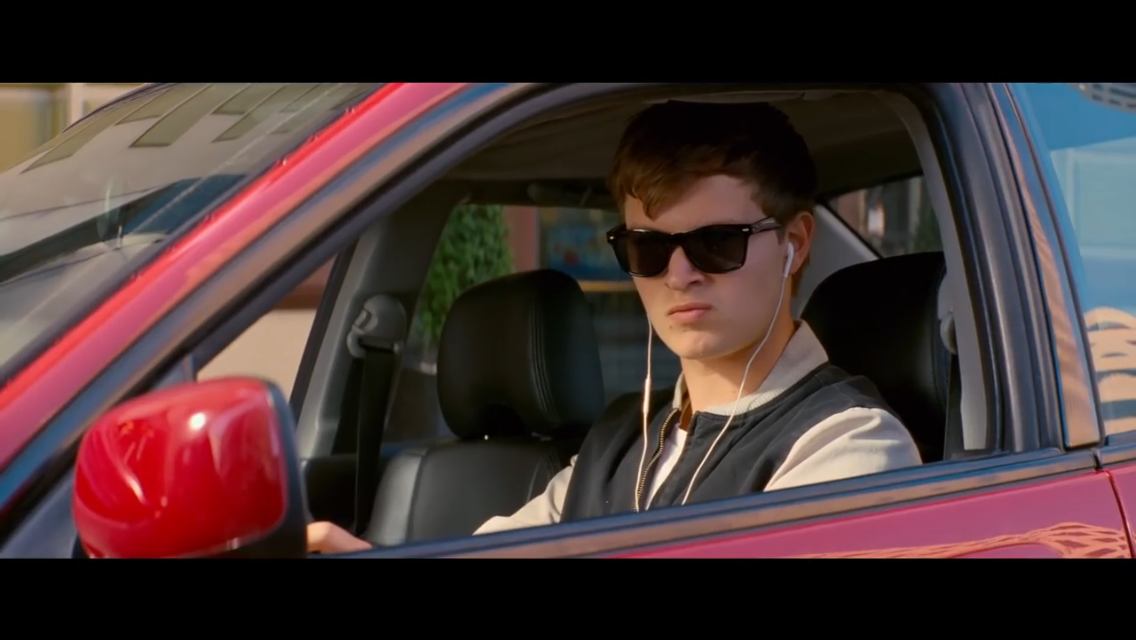
I really enjoyed Baby Driver. Edgar Wright delivered a tightly crafted, exquisitely choreographed thrill ride of a movie, with a killer soundtrack and some of the best action sequences of the year. I loved the eccentric characters, the chemistry between Ansel Elgort’s Baby and Lily James’ Debora in particular, although at times it felt like it was trying a little too hard to be a Tarantino film, particularly with bits of the dialogue. I’m still amazed by the intricacy of the filming and post production work required to make each moment of the film move in rhythm with whatever song happens to be playing on Baby’s iPod. Baby Driver was a solid A film for me, and I look forward to seeing it again as I know I’ll pick up on many details I missed the first time.
However, I find myself still hung up on Baby Driver’s ending. (Spoilers below, obviously!)Continue reading →
Harry Potter is back in Fantastic Beasts and Where to Find Them! No, wait, this isn’t The Cursed Child, though it is filled all of your favorite Harry Potter characters! Ok, maybe not, but you might recognize a few names here or there. But it is set in the beloved world of J.K. Rowling’s Harry Potter series! Well alright, it’s actually set in the 1920s in New York, filled with unfamiliar magical slang and completely foreign to both our protagonist and to viewers. Still, this is the Harry Potter spinoff that everyone has yearned for since the series concluded! No, it’s not? So why should anyone care about Fantastic Beasts and Where to Find Them, when it seemingly lacks everything that audiences grew to love about the Harry Potter saga? For starters, it’s an exciting, dark, fun, funny, emotional, and immensely creative film set in a rich and fascinating world that is strong enough to stand on its own. It deepens and broadens the Harry Potter universe, showing us previously unexplored aspects, locations, and eras of the wizarding world providing new insights and a greater context for the events that shaped the life of the Boy Who Lived. And it kicks off a five film series in a way that’s far more topical, political, relevant, and just more interesting than any of the Harry Potter films that came before (matching the tone of the later books much more closely than the movies). And most importantly to me at least, this is the story that J.K. Rowling wanted to tell, that she thought would be the most compelling way to expand and explore the universe she created. As far as I’m concerned she was right, and I can’t wait to see more.
The Marvel Cinematic Universe keeps expanding, seemingly showing no signs of stopping. Each new film brings us new heroes to fight new villains, new locations or planets filled with people to save, and new clashes and conflicts to bring characters together or drive them apart. But while Doctor Strange certainly continues the trend, it broadens the universe in entirely new ways, pushing not only the boundaries of superhero storytelling but of visual craftsmanship. It’s a mind-bending head trip of a film, which attempts to introduce a spiritual aspect to an otherwise science fiction series, all while serving up some of the most creative and exhilarating action sequences in recent memory. Doctor Strange may stick to the tried and true Marvel origin story formula, but it’s a fun ride anchored by a strong cast and impressive effects, and it offers an intriguing glimpse into the potential future of this ever-expanding Universe.
I should have known. When a lady down in the front of my full theater pulled out her cell phone duringthe pre-show warning to turn off your cell phone in order to scroll through an email full of pictures with her husband, zooming in on each one and discussing it, and continued doing this into Eye in the Sky’s opening credits until I yelled for her to put her phone away, I should have known things were going to go badly. We’ve all had movies ruined by rude audience members, people who won’t put away their cell phones (or don’t know how to put them on silent), never stop talking, eat loud or foul-smelling food, kick your seat, etc. But far more rare is an experience where a movie is ruined because of the audience’s reaction to it, either because they simply did not get the movie’s intentions or because you had a very different emotional response than the people surrounding you in the dark. I endured just such an event while seeing Eye in the Sky, and it not only made it impossible to fully enjoy the film from that moment on but it also destroyed a good bit of my faith in humanity. I was disgusted.
People often like to compare the current “revival” phase of Walt Disney Animation with the well-known Disney Renaissance era of the 1990s, matching recent computer animated films to their highly successful hand-drawn counterparts from 20 years ago. Bolt is paired with Oliver & Company, which both kicked off their respective phases, which makes Tangledthe modern equivalent of The Little Mermaid and Frozenthe partner of Beauty and the Beast. (What people do with Wreck-It Ralph and Big Hero 6, or why The Princess and the Frog usually gets left out, I have no idea, which is why I tend to avoid that debate.) But even the most hardcore Disney fan will have trouble finding which of the previous 54 Disney animated Zootopia most resembles, for the simple reason that Disney has never made a film like Zootopia before. By combining the familiar sight of anthropomorphized animals wearing clothes, recalling everything from the earliest Mickey Mouse cartoons, through Robin Hood, and even up to Chicken Little, a clever detective story, the style of a buddy cop movie, and a brilliantly realized world, Zootopia is one of Disney’s most fun and clever movies. But it’s Zootopia’s message and its deeper themes which set it apart, themes that could not be more relevant to the world we live in today.
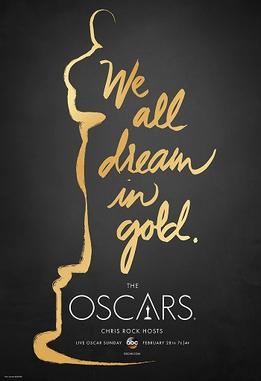
Once again, it’s time for Oscar predictions. I did pretty well last year, getting 16 correct once again (that seems to be what I always get [seriously, I didn’t even have to edit this sentence]). There are some tight races this year, but also a few sure things, so it’s bound to be an interesting evening. I can’t wait to see how Chris Rock tackles the shocking lack of diversity among the nominees. And while awards shows always seem fairly out of touch with popular opinion, I’ll always be a fan of the Oscars. So read on for my (dicey) predictions, as well as my picks if I could hand out the statues as I see fit. And then let me know who you think will be a big winner Sunday night!
Best Short Film, Live Action: Prediction:Ave Maria My Pick: N/A
Best Short Film, Animated: Prediction: Sanjay’s Super Team My Pick: Sanjay’s Super Team
The Coen Brothers mainly make two distinctive types of films. On the one hand, many of their films fall into the category of quirky comedies, such as Raising Arizona or O Brother, Where Art Thou?. On the other hand, they’ve also dabbled in more serious, yet still unique, dramas like No Country for Old Men and True Grit. Hail, Caesar!, a farcical romp through a 1950s Hollywood studio, falls squarely into the first category, and as such is the funniest film the Coen Brothers have made in years, particularly for classic film fans. It’s a return to form for the writing/directing pair, combining an all-star cast with a distinct storytelling style and comedy that demands a fair amount from viewers in able to fully appreciate it. The end result is a film that feels different from anything we’ve seen onscreen lately and is bound to please any fans of the Coens or of the golden age of Hollywood.
The Finest Hours is decidedly old-fashioned. In many ways it takes its storytelling style from the time period in which the film is set, giving us pacing, characters, and performances which feel like they belong back in the early 1950s as if the film itself could have been showing in a theatre in snowy Chatham, Massachusetts on that fateful day in February of 1952. This old-fashioned approach will probably be enough to keep most viewers away, but to me it’s the film’s greatest strength. The film tells a heroic story in an understated way, perfectly matching the modesty of the historic figures involved. That along with a solid cast who really fit with the feel of the time period, some impressive visual effects, and a steady storytelling hand combine to make The Finest Hours a far better and more engaging film than it has any right to be.



 The Marvel Cinematic Universe keeps expanding, seemingly showing no signs of stopping. Each new film brings us new heroes to fight new villains, new locations or planets filled with people to save, and new clashes and conflicts to bring characters together or drive them apart. But while Doctor Strange certainly continues the trend, it broadens the universe in entirely new ways, pushing not only the boundaries of superhero storytelling but of visual craftsmanship. It’s a mind-bending head trip of a film, which attempts to introduce a spiritual aspect to an otherwise science fiction series, all while serving up some of the most creative and exhilarating action sequences in recent memory. Doctor Strange may stick to the tried and true Marvel origin story formula, but it’s a fun ride anchored by a strong cast and impressive effects, and it offers an intriguing glimpse into the potential future of this ever-expanding Universe.


 The Love Pirate