The Hunger Games: Mockingjay – Part 1 could definitely have benefitted from dropping the saga’s title and just sticking with that of Suzanne Collins’ novel. While it is the continuation of the story that began two years ago with The Hunger Games, it is the first film in the series not to feature the titular games, although their impact looms large over Katniss’s mental and emotional state. The “Part 1” has renewed the debate over splitting books into multiple films (a complete success with Harry Potter, a disaster with Twilight, and the jury is still out on The Hobbit), as well as what is actually required to distinguish a film as more than just an extended TV episode, but at this point it’s so common as a practice that it’s been grudgingly accepted by many. But the most important part of the title is right there in the middle: Mockingjay. Mockingjay focuses almost entirely on the idea of the Mockingjay, as a symbol and as a person, and to that end it’s an extremely successful and engaging film despite its occasional faults.
Category Archives: Movie Reviews
Review: Big Hero 6
At this point it’s pretty safe to say that the Disney Revival is now in full swing. The era which began with either Bolt or The Princess and the Frog depending on your tastes, and which so far seems to mirror the trajectory of the Disney Renaissance in the 1990’s, has seen Disney producing some seriously outstanding films in the last few years. Tangled is an underrated masterpiece, Wreck-It Ralph is a creative, kinetic marvel, and Frozen has reached the point where it no longer requires description. Big Hero 6 represents not just the next big step for Disney Animation, but also the first attempt by Disney at creating its own Marvel-based content outside of the wildly successful Marvel Cinematic Universe. And while Big Hero 6 could never hope to live up to something like Frozen, it’s still wildly entertaining and enjoyable in its own right, and another solid rung in the Disney Revival ladder.
Review: Feast
I’m definitely a fan of the recent resurgence of animated shorts preceding feature films. It harkens back to an earlier time when cartoons and news reels were a part of the cinema experience (though I hope they don’t bring back news reels!). Pixar, of course, has always had a short attached to each of their new releases, but Disney Animation has gotten back in the game for their last three movies and the results have been impressive. Paperman (which aired before Wreck-It Ralph) is nothing less than a masterpiece, while Get a Horse! (attached to Frozen) was a fun, creative use of 3D that captured a bit of that historical Disney magic. The recent debut of Big Hero 6 brought with it a new short, Feast, that serves both purposes of an animated short: it serves an hors d’oeuvre for the main film while also telling an endearing and entertaining story of its own.
Review: Pride
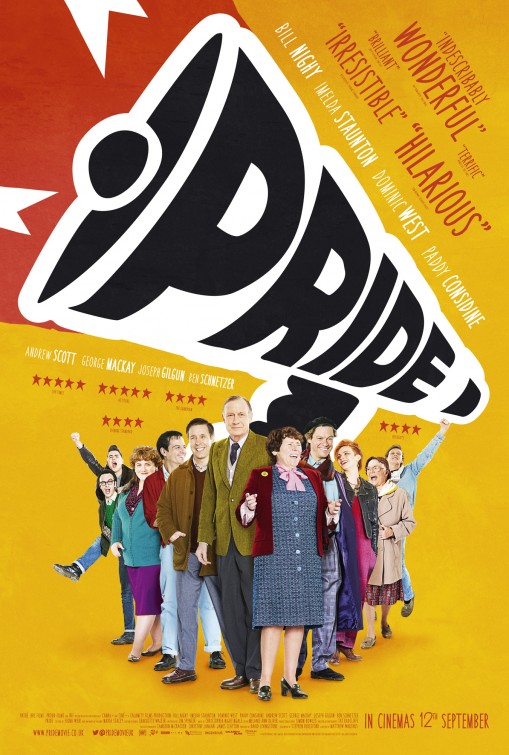
The year is 1984. Miners in the UK, angered by the government’s plans to close more than 70 coal mines (the coal industry had been nationalized following World War II), went on a strike that would last almost a year. The miners manned the picket lines every day, while back in town their wives strove to keep the community together, making the most of what donations of food and clothing they could find, hoping to keep the government from starving them out. If that sound like a familiar setting for a film, perhaps you’re thinking of Billy Elliot, but instead of merely using a place and time to tell a story, Pride actually tells the story of that place and time, particularly of the unorthodox union of two groups who just might be able to help each other out.
Review: The Boxtrolls
I’ve come to feel that stop-motion animated films need to be graded on their own scale, separate both from films in general but particularly from computer animated movies. Partly that’s due to the simple fact that so few stop-motion films are released anymore; The Boxtrolls is the only one due in 2014, while there are at least 10 major studio computer animated movies set to come out this year. In fact, while seemingly every studio is eager for a computer animated hit, there are very few sources of stop-motion animation, mainly consisting of Laika and Aardman Animations (with an occasional film from Tim Burton when he feels like it). In the last five years and despite producing only three films, Laika has set itself apart as a film studio with a vision, making interesting, unique films like Coraline and ParaNorman. With The Boxtrolls, it has solidified its place with the likes of Pixar as a studio that makes movies of the highest quality and vision which demand to be seen, and whose involvement with a film is more important than voice casts, writers or directors in attracting my interest.
Review: The Hundred-Foot Journey
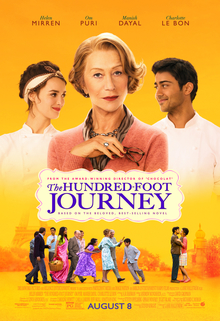
Sometimes when you go out to a nice restaurant you want the newest, most exciting thing on the menu. You want something that will challenge your taste buds, something surprising and original, which gives you unique ingredients in unforeseen combinations, blowing your mind with its creativity. Other times you want something intimately familiar, a favorite dish you’ve ordered countless times before. It may familiar and routine, but while the mind craves the new sometimes the heart longs for the familiar. The same could be said for film. In The Hundred-Foot Journey, the characters spend their days trying to reconcile the new and creative with the old and familiar. As for the movie itself there’s little new to shock and surprise, but in its familiarity the film feels intimate and reassuring, hitting all of the familiar beats of a dish that we may know very well yet is still wonderfully crafted and a joy to eat.
Review: Teenage Mutant Ninja Turtles
I was a huge Ninja Turtles fan growing up. I had all of the toys, watched the cartoon show every day, dressed as a Ninja Turtle for two different Halloweens (Michelangelo and Donatello), and the first time I went to New York City I pointed to a manhole cover and asked my mom if that was where the Ninja Turtles lived. I even repeatedly watched the video of the musical stage show. In fact, the only aspect of the Turtles that I was never interested in as a kid were the comics. But more than anything, I watched the 1990 Teenage Mutant Ninja Turtles movie over and over again. It was the first film that I ever completely memorized, and I wore that VHS out. I was originally supportive of resurrecting the Turtles for the big screen, as I feel like they fill a niche that most other comic book superhero movies seem to miss. However, the end result fails to capture what made the Turtles special to begin with and is nothing more than a watered-down shadow of the well know characters, too eager to be “cool” to be of much interest.
Review: Into the Storm
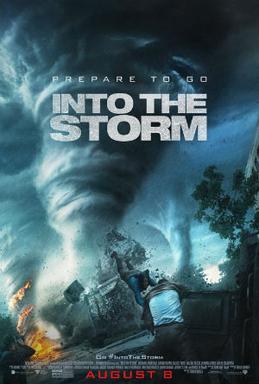
It’s inevitable, if unfair, that Into the Storm is doomed to be compared to Twister. Twister, despite having its fair share of detractors, has become the default tornado movie, so well and widely known that almost everyone is familiar with it, perhaps because it is shown with surprising regularity on various cable channels. It’s also a film that I deeply love and I think is an unappreciated masterpiece, none of which could bode well for Into the Storm. But I’ve long believed that familiar stories are worth retelling, and a new take on something old can still have value, so I went into the movie somewhat dubious, but hopeful that it might hold its own. Unfortunately, the only conclusion I could draw by the end also happens to be an unfortunate and overused pun that I nevertheless feel compelled to make: it sucked.
Review: Guardians of the Galaxy
Story is made up of much more than plot. I’ve often seen movies with original or unique plots praised for having a great “story,” while other movies get criticized for a dull “story” when in actuality they mean a predictable plot. To me, I envision the term “story” to be the equivalent of everyone sitting around a campfire listening to someone spin a tale. I’d much rather hear a familiar yarn interestingly told, by someone who knows the best way to engage those of us around the fire, read the audience and hit our emotions, rather than someone who tells a completely unique series of events but does so in a flat monotone, convinced that their plot is interesting enough to excuse them from doing the hard work required to make the story engaging. Why do I bring this up? It’s because Guardians of the Galaxy has a plot that is derivative and predictable, but it is so wonderfully, cleverly and creatively told that as a “story” it is one of the most unique and unpredictable I’ve watched in a long time.
Review: Earth to Echo
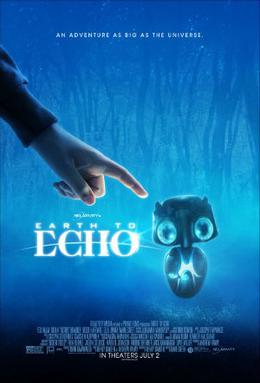
Nostalgia can be dangerous, especially when it comes to the film industry. Nostalgia is what gives us endless remakes, reboots and sequels to what’s come before, in the place of more original fare. It seems like most people would choose to go to a film based on something that they’re familiar with than take a chance on something new, and the studios know this. Nostalgia is often served up as a method of forging an emotional connection with an audience, in place of real emotion in the story. But nostalgia can be dangerous from the other side of things too, when it prevents us from giving a film a chance simply because it looks similar to something we’ve seen and loved before. (I recently had a long argument with a coworker over whether movies released today will still be watched in 50 years as movies from the 1960’s are still watched today, with the twist being that he doesn’t see modern movies because he doesn’t think they can possibly compare to the films of his youth.) I think Earth to Echo has become a victim to nostalgia.