Analysis: Saving Mr. Banks and Disney Ideology

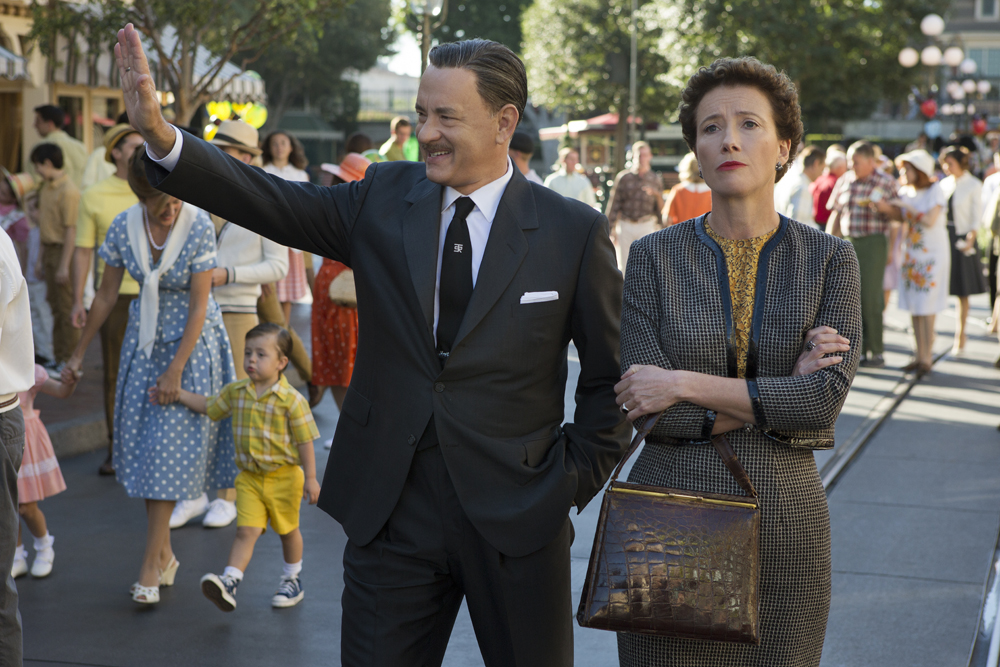
Saving Mr. Banks is an interesting film, and one that’s deeper than it may appear at first glance.  The story of P. L. Travers and Walt Disney and the making of the 1964 film Mary Poppins is used as a way to examine how we deal with the harsh realities of the world in which we live and also what responsibilities we have towards preparing children for those realities.  It examines how the events of our youth shape our lives as adults and presents some of the choices we can make about how to live our lives.  It offers a critique of the pre-judgments that people have a tendency to make, particularly as it pertains to Disney as a man, a company, a brand and an ideology.  It defends that ideology specifically, without invalidating other methods of thought.  And it has done all of this while facing some surprisingly harsh criticism and claims that the film is nothing but propaganda.  I feel like that makes it ripe for some analysis.  (Spoilers Below!)

*Disclaimer:  For those who regularly read this blog, it’s fairly obvious that I’m a Disney fanatic.  I’m a stock-owning, fanclub-card-carrying, happy-to-take-every-vacation-to-the-parks obsessive.  I seek out every Disney experience I can find, but more than that I buy into the ideology.  Whether that makes me a mindless drone or a corporate stooge (I promise I’m not getting paid by Disney, though I’d love to be) is for someone else to decide.  The short of it is that I am in no way unbiased when it comes to Disney, and I’ve defended the company before.  And while it hurts whenever something we love is criticized, my goal here is not for this to simply be one more “Disney is awesome and how dare you say otherwise!” post, but instead an examination of the film and what it has to say about varying worldviews and the Disney ideology in particular.  Take from it what you will.  You can read my review of the film here.

Continue reading

Review: Saving Mr. Banks

Mary Poppins is a legendary figure in 20th century pop culture.  From the eight books written by P. L. Travers to the 1964 Disney musical (and the 1984 Soviet version), to the 2004 stage version, to the 30 Mary Poppins’ who showed up at the 2012 London Olympics to vanquish the villains of British literature, there are probably very few people who are not at least familiar with the famous nanny.  But while Travers’ books were famous decades beforehand, most people probably know Mary Poppins through the Disney film, which is one of the most famous and successful films of its time, garnering 13 Oscar nominations (and 5 wins), launching the film career of Julie Andrews, and filling our heads with memorable music.  In fact, I would guess that these days far more people have seen the film than have read the books, and those who have read them most likely did so after seeing the movie.  But what most people probably don’t know, and what Saving Mr. Banks sets out to tell, is the story of how the film was made, and the struggle of Walt Disney and P. L. Travers to find a way to understand each other.

It’s 1961 and Mrs. Travers (as she likes to be called) is having some financial difficulties.  Continue reading

Trailer Tuesday: Noah

Welcome to “Trailer Tuesday” where I talk about trailers for upcoming movies, since I’ve always found them to be endlessly fascinating.

I had almost forgotten that writer/director Darren Aronofsky was making a film version of the Noah story until I saw this trailer on the big screen.  After having seen the trailer twice in the theater and several times online I’m still not entirely sure how I feel about it.  Take a look for yourself below, and read on for my thoughts:

Continue reading

What if there was a Best Voice Performance Oscar? – 2004

(Note: This is a fictional creative thinking exercise, inspired by hours of contemplation of which animated performances have been most worthy of attention over the years.  This feature imagines that a Best Voice Performance category was added to the Oscars following Beauty and the Beast’s nomination for Best Picture at the 64th Academy Awards.  Each week I’ll cover the hypothetical nominees and winner from one year of animated performances.)

Following the nomination for Andy Serkis at the 76th Academy Awards, audiences looked ahead to 2004 for any other motion capture performances that might also earn a slot among the Best Voice Performance nominees.  However, the only potential candidate turned out to be The Polar Express, which most insiders felt did not produce performances worthy of nomination.  Instead, discussion focused on a potential Disney/Dreamworks rematch, with a sequel to the film that put Dreamworks on the map and another new film from them on one side and a new traditionally animated film from Disney and the latest Pixar film on the other.

Continue reading

Trailer Tuesday: How to Train Your Dragon 2

Welcome to “Trailer Tuesday” where I talk about trailers for upcoming movies, since I’ve always found them to be endlessly fascinating.

2010’s How to Train Your Dragon was something of a surprise hit, making almost half a billion dollars at the box office and getting a couple of Oscar nominations, so a sequel was inevitable (especially when you consider the success of the TV show spinoff).  The first film, very very loosely inspired by the book series by Cressida Cowell, was a fun, funny beautifully animated film, whose plot may not have been overly interesting but which had a firm anchor in the relationship between Hiccup and Toothless.  The new trailer for How to Train Your Dragon 2, highlights that relationship, while trying to amp up the story and show off the visuals.  Take a look below and read on for my thoughts:

Continue reading

What if there was a Best Voice Performance Oscar? – 2003

(Note: This is a fictional creative writing exercise, inspired by hours of contemplation of which animated performances have been most worthy of attention over the years.  This feature imagines that a Best Voice Performance category was added to the Oscars following Beauty and the Beast’s nomination for Best Picture at the 64th Academy Awards.  Each week I’ll cover the hypothetical nominees and winner from one year of animated performances.)

After the controversy at the 75th Academy Awards, it seemed all anyone could talk about was Andy Serkis and the eligibility of his portrayal of Gollum in the Lord of the Rings films.  His motion capture performance wasn’t nominated either for Best Supporting Actor or Best Voice Performance, and there was considerable debate over whether the acting or the animation branch (or both) would bend and give him the nomination.  What the speculators didn’t count on was the arrival of Pixar’s latest film, one which would go on to be regarded as a game-changer in the industry on account of its depth and storytelling.

Continue reading

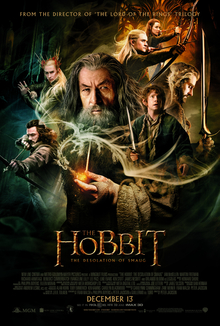
Review: The Hobbit: The Desolation of Smaug

The Two Towers is my favorite film of the Lord of the Rings trilogy.  While most people either preferred the pitch-perfect styling of the first film, or the epic conclusion of the third, for me I thought the middle chapter stood out in an interesting way.  I feel like a lot of the film’s success owed itself to how writer/director Peter Jackson was able to take a book in which little happens and craft it into a satisfying story arc which fit perfectly into the trilogy but also stood alone as a unique accomplishment.  He took the handful of major events in the story and fleshed them out, allowing him to focus much more on character and drama and less on sticking to the detail of the text, and it really showed off his (and his team’s) writing skills.  I had high hopes that The Hobbit: The Desolation of Smaug, the second film of Jackson’s Hobbit trilogy would follow in the footsteps of The Two Towers, and while it’s definitely an excellent film, it lacks the creativity and emotion of his previous middle movie.

The Desolation of Smaug picks up right where An Unexpected Journey left off.  Continue reading

What if there was a Best Voice Performance Oscar? – 2002

(Note: This is a fictional creative writing exercise, inspired by hours of contemplation of which animated performances have been most worthy of attention over the years.  This feature imagines that a Best Voice Performance category was added to the Oscars following Beauty and the Beast’s nomination for Best Picture at the 64th Academy Awards.  Each week I’ll cover the hypothetical nominees and winner from one year of animated performances.)

The arrival of Dreamworks Animation on the scene with the success of Shrek, which won both the inaugural Best Animated Feature award and the Best Voice Performance award at the 74th Oscars, was a turning point for the animated industry.  No longer was animation the solely linked to Disney, and the result was an expansion of animation and a greater variety of voice roles for famous actors.  However, all of that would be overshadowed in 2002 by one single performance.  Andy Serkis’s portrayal of Gollum in The Lord of the Rings: The Two Towers was energizing for the industry and immediately led to calls for a Best Supporting Actor nomination for his work in the film, in spite of the fact that the performance used a combination of animation and motion capture instead of the actor actually appearing in the film.  It was a foregone conclusion for many that he would automatically receive a nomination in the Best Voice Performance category.

Continue reading

Trailer Tuesday: Interstellar, Godzilla, Jupiter Ascending and Edge of Tomorrow

Welcome to “Trailer Tuesday” where I talk about trailers for upcoming movies, since I’ve always found them to be endlessly fascinating.

Instead of one trailer today, you’re getting four!  There have been a slew of new trailers, all of which are somewhat interesting but none of which are enough to really get me excited.  So instead of either wasting an entire post on each or skipping them altogether, I figured I’d hit as many as I can at once.  Let’s look at the new trailers for Interstellar, GodzillaJupiter Ascending and Edge of Tomorrow.

First up, Interstellar: Continue reading

Favorite Moment – Star Trek: First Contact

Welcome to “Friday Favorites” which highlight some of my favorite movie-related things.

Star Trek: First Contact is without a doubt my favorite Star Trek film, even over Wrath of Khan.  I’m well aware that I have a bias towards the Next Generation crew, but there is so much in First Contact that makes me pick it over the other 10 films.  It has a great screenplay by longtime Trek writers Brannon Braga and Ronald D. Moore, which gives all of the characters moments to shine and shows an intimate familiarity with the universe.  The same goes for Jonathan Frakes, who directs the film with a light touch that can only come from years of working with the same cast and crew.  It has some of the best action of the series and a great villain in the Borg.  The non-TNG cast are great, especially James Cromwell and Alfre Woodard.  The effects are a huge step up from previous efforts and the new Enterprise-E is gorgeous.  Beyond all that, the film has some interesting ideas both about our past and our future.

There’s one moment that really cements the film in my mind, but it requires a bit of plot background.  Continue reading