What to ask yourself before texting during a movie…

Every movie fan has been annoyed by inconsiderate people in the audience.  Worst of all might be the people who check their phone during the movie, not caring about the bright screen that’s hugely distracting.  Every theater has some sort of pre-show behavior warning, though some are better than others.  (We’ve come a long way since the days where “no smoking” was the most important warning that theaters had to give.)  Here’s one, from the famous Alamo Drafthouse, which has a very strict etiquette policy.

That’s Shailene Woodley and Miles Teller Continue reading

A Critic’s Manifesto

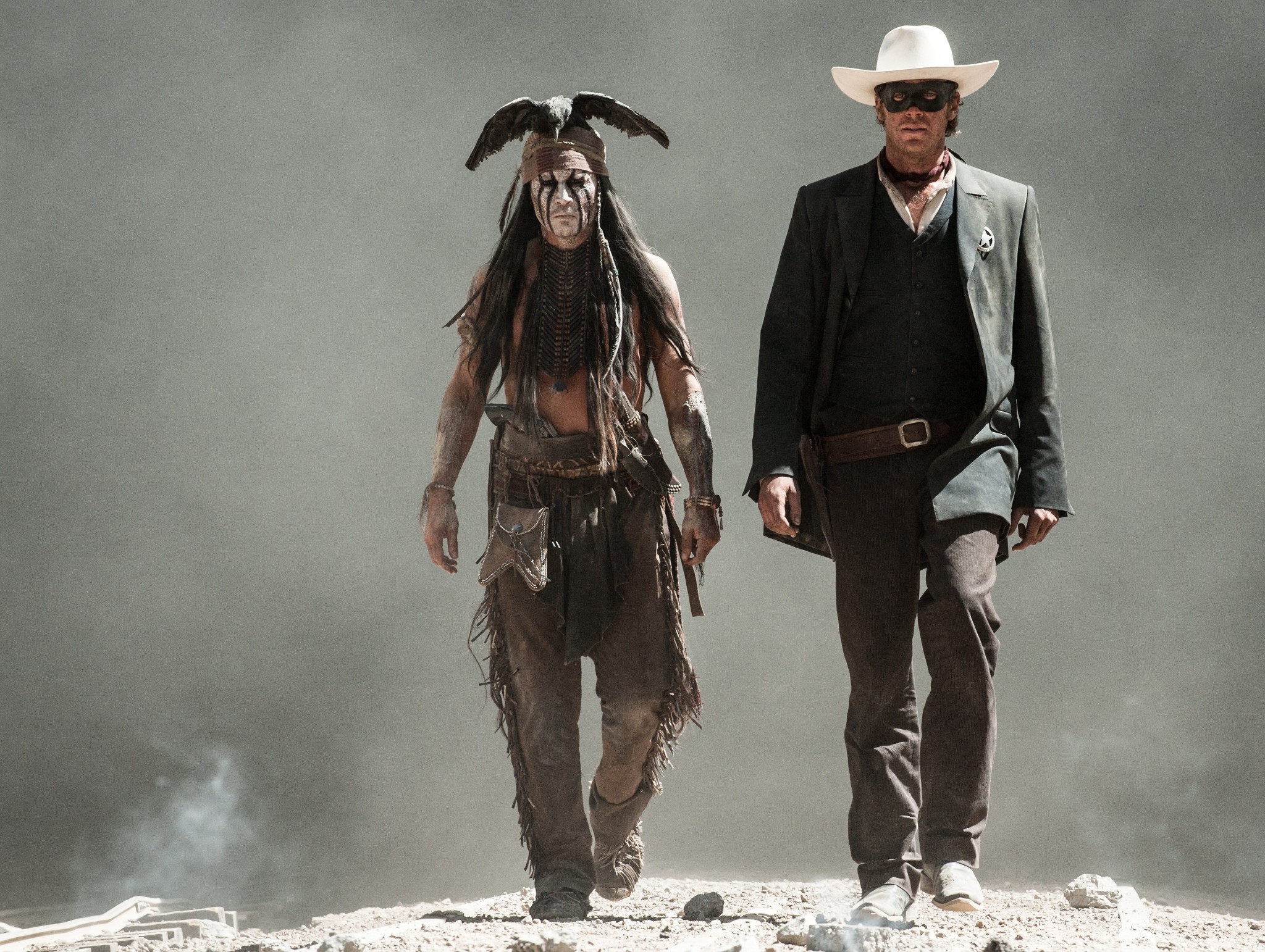
I’ve been watching the Rotten Tomatoes score for The Lone Ranger slowly climb from a rather horrific 17% today, and it’s gotten me thinking about critics and reviews and the movie review industry as a whole.  In fact, I read a blurb from one review that stated, “Everyone wants this to be horrible,” and it makes me wonder how much film reviews in the industry are shaped both by what people expect from a movie, what they want to happen to the movie, and what they think people expect and want the reviews to say.  So if you’ll excuse the rambling, unorganized and meta nature of this post, here are some of my thoughts. Continue reading

Friday Favorites: Favorite Speech – Lincoln

Welcome to “Friday Favorites” which highlight some of my favorite movie-related things.  It could be a favorite character or casting choice, a favorite song or score, a favorite scene, line of dialogue, shot or simply a moment.  Anything is possible (costumes, sets, etc) and I’d love to hear your suggestions.  Note: Just because something appears here does not make it my absolute #1 favorite thing in that category, but it is simply “one of my favorites”.

There are few things I love more than a good movie speech.  My first memory of intentionally memorizing dialogue from a movie came when Independence Day was released on VHS and I watched Bill Pullman’s speech before the final battle over and over, writing it down and reading along, trying to get both the words and delivery as exact as I could.  A great movie speech can be anywhere from a couple sentences to pages of dialogue, and can be delivered to huge crowds or as a monologue in solitude.  Speeches have been the basis of entire movies (The King’s Speech being the most obvious example).

Lincoln is full of speeches, as you would imagine a movie about politicians to be. Continue reading

Analysis: Argo and Filmmakers’ Responsibility

Even before Argo won the Academy Award for Best Picture, Hollywood’s top honor, it was already being plagued by controversy.  (Nevermind the fact that every other nominee was controversial in some way: Lincoln got easy facts wrong, Silver Linings Playbook mishandled mental illness, Beasts of the Southern Wild romanticized poverty, Zero Dark Thirty lied about torture’s effectiveness, Django Unchained was racist and used the n-word too much, Russell Crowe’s singing was horrible in Les Miserables, Life of Pi misrepresented Indians and religion, and Amour advocates assisted suicide and wasn’t even in English!)  It’s nothing unusual for films to encounter controversy, or even to court it, but the debates this year about facts and politics in film have raised questions (none of them new) about the responsibility of filmmakers to the audience.
Continue reading

2013 Oscars Recap

Another Academy Awards ceremony has come and gone, and overall it was an enjoyable evening.  There were few surprises among the award winners, though I only correctly predicted 16/24 winners correctly (equaling my score from last year, at least I’m consistent).  In addition to there being no real surprises there are also no winners that I feel were not deserving to win; even if I disagree with the outcomes, the awards went to quality films/performances which makes it hard to complain too loudly.  The show itself was enjoyable, if not spectacular, with some wonderful moments and some bits that fell flat, and I was surprised with how much I enjoyed Seth MacFarlane.  Read on to see my thoughts in a bit more detail.
Continue reading

Review: Lincoln

             It’s winter, 1864.  Abraham Lincoln sits in the rain as a couple of black union soldiers recite back to him the Gettysburg Address, delivered about a year before.  It’s been almost two years since the signing of the Emancipation Proclamation and the Civil War is drawing to a close.  So begins Steven Spielberg’s long awaited masterpiece, Lincoln.  It tells Lincoln’s story in a somewhat unconventional way, by focusing on one event during his complex and fascinating lifetime: the fight for the passage of the 13th Amendment to the Constitution, banning slavery.Lincoln has recently been reelected, and is opposed by a stubborn lame-duck Congress.  He knows that the war will end soon, and he knows that the Emancipation Proclamation, a wartime executive order that freed only some of the slaves, will not stand up to legal scrutiny once peace is declared.  He has tried to sell the idea that an amendment abolishing slavery will bring an end to the war, but he knows that if rumors of peace talks spread that they will effectively kill any hope of passing such an amendment.