
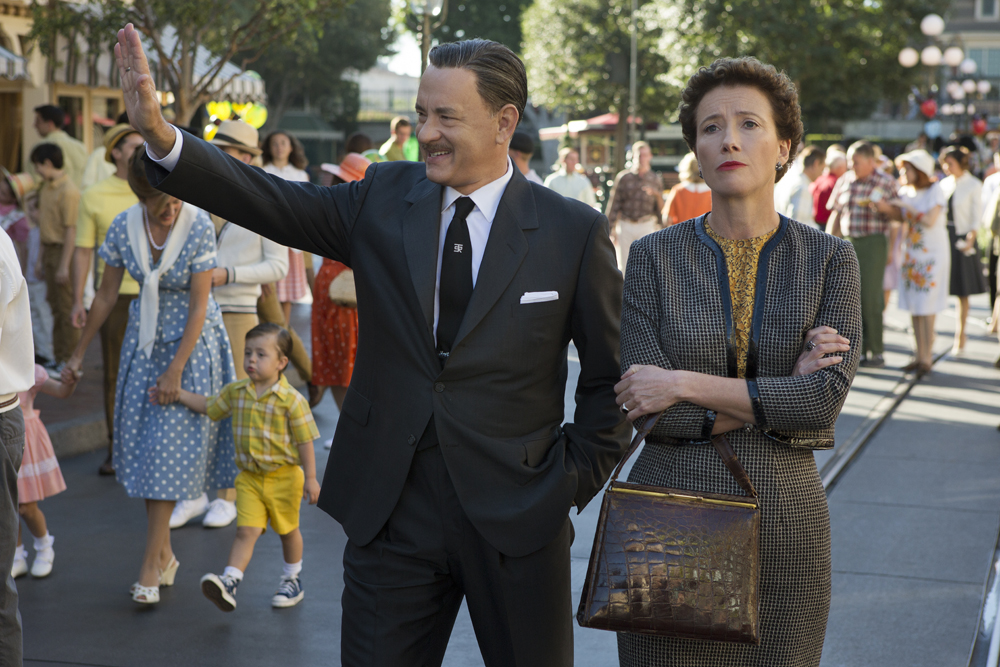
Saving Mr. Banks is an interesting film, and one that’s deeper than it may appear at first glance. The story of P. L. Travers and Walt Disney and the making of the 1964 film Mary Poppins is used as a way to examine how we deal with the harsh realities of the world in which we live and also what responsibilities we have towards preparing children for those realities. It examines how the events of our youth shape our lives as adults and presents some of the choices we can make about how to live our lives. It offers a critique of the pre-judgments that people have a tendency to make, particularly as it pertains to Disney as a man, a company, a brand and an ideology. It defends that ideology specifically, without invalidating other methods of thought. And it has done all of this while facing some surprisingly harsh criticism and claims that the film is nothing but propaganda. I feel like that makes it ripe for some analysis. (Spoilers Below!)
*Disclaimer: For those who regularly read this blog, it’s fairly obvious that I’m a Disney fanatic. I’m a stock-owning, fanclub-card-carrying, happy-to-take-every-vacation-to-the-parks obsessive. I seek out every Disney experience I can find, but more than that I buy into the ideology. Whether that makes me a mindless drone or a corporate stooge (I promise I’m not getting paid by Disney, though I’d love to be) is for someone else to decide. The short of it is that I am in no way unbiased when it comes to Disney, and I’ve defended the company before. And while it hurts whenever something we love is criticized, my goal here is not for this to simply be one more “Disney is awesome and how dare you say otherwise!” post, but instead an examination of the film and what it has to say about varying worldviews and the Disney ideology in particular. Take from it what you will. You can read my review of the film here.
 The Love Pirate